

You walk into your living room on a cloudy afternoon and it feels more like a cave than a cozy space. The walls feel closer, the colors look dull, and no amount of rearranging the furniture seems to help. Here’s the good news: you don’t need a renovation or expensive new windows to fix it. Strategically placed glassware and reflective decor accents can transform how light moves through a space, making even the darkest corners feel alive. This guide walks you through exactly what to use, where to place it, and how to layer glassware and lighting for the best results.
Table of Contents
- Essential tools and materials for brightening with glassware
- Step-by-step: Placing glassware for maximum natural light
- Amplifying artificial light: Glassware and lighting combos
- Finishing touches: Suncatchers and unique glass decor accents
- What most decor guides miss about glassware and brightness
- Brighten your home with artisan glassware and lighting
- Frequently asked questions
Key Takeaways
| Point | Details |
|---|---|
| Glassware reflects light | Add clear or artistic glass pieces to bounce light and brighten any room. |
| Strategic placement matters | Put glassware near windows or light sources for the most dramatic results. |
| Pair with mirrors | Using mirrors alongside glass decor can significantly amplify brightness. |
| Artificial lighting works too | Accent lighting and glassware combinations ensure your space stays luminous after sunset. |
| Small details make a difference | Suncatchers and layered glass accents add personality and sparkle to your decor. |
Essential tools and materials for brightening with glassware
Now that you know glassware can brighten a room, here’s what you’ll need to get started.
The role of glassware in home decor goes far beyond serving drinks or holding flowers. Glass surfaces reflect and refract light, and when placed thoughtfully, they scatter that light across walls and ceilings in ways that make a room feel more open and airy. Reflective glass surfaces can help bounce light around a space, making seating areas feel noticeably brighter.
Glassware types that work best for light reflection:
- Clear glass vases in varying heights (tall vases near windows are especially effective)
- Glass bowls and trays placed on coffee tables or shelves to catch overhead or side light
- Suncatchers hung in windows to scatter rainbow prisms across walls
- Colored glass bottles or vessels for warm ambient glow when light passes through them
- Glass candle holders that multiply the glow of a small flame or LED candle
Best placement locations to start:
- Window ledges and windowsills (front-row access to natural light)
- Coffee tables and side tables (central positions that catch ambient room light)
- Open shelves and bookcases (multiple levels create layered reflections)
- Entryways and hallways (often forgotten zones that benefit from extra brightness)
You will also want a few accessories to support your setup. A large mirror or two is essential. Mirrors work as teammates with glass decor, doubling the effect of any light that hits them. A few LED strip lights or small spotlights give you control over artificial light direction. And keep a microfiber cloth handy because clean glass reflects far more light than dusty glass.
| Tool or material | Primary purpose | Best location |
|---|---|---|
| Clear glass vases | Reflect and scatter natural light | Windowsills and shelves |
| Glass bowls and trays | Ambient light distribution | Coffee tables, entryways |
| Suncatchers | Prism effects, rainbow scatter | Window hangings |
| Mirrors | Multiply and redirect light | Opposite or beside windows |
| LED accent lights | Controllable artificial brightness | Behind or beneath glassware |
When browsing artistic glassware picks for this purpose, look for pieces with smooth, rounded surfaces rather than heavily frosted or opaque finishes. Those textures are beautiful, but they scatter light unpredictably and absorb more than they reflect.
Pro Tip: Clear glass maximizes raw brightness, while colored glass adds a warm tint that works beautifully for cozy evening light. Use both in the same room at different heights for a layered, dynamic effect.
Step-by-step: Placing glassware for maximum natural light
Once you have your materials ready, it’s time to put them into action for dazzling daylight effects.
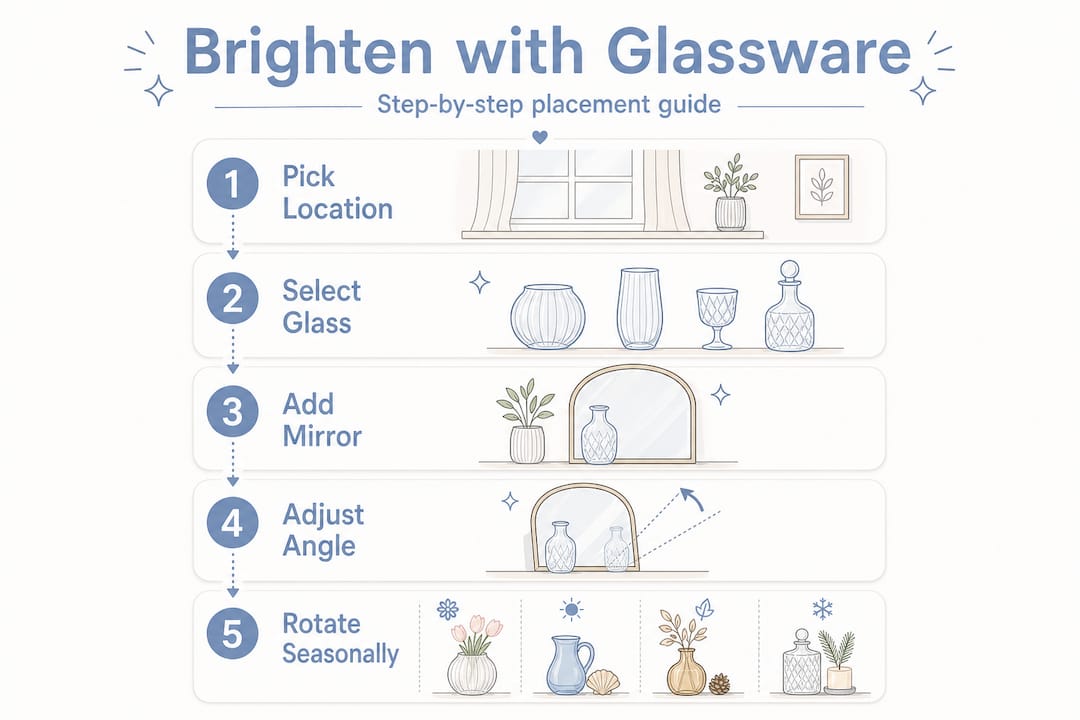
Placement is everything. You could own the most stunning collection of vases and bowls, but if they are tucked into a dark corner, they won’t do much for your room’s brightness. The goal is to position glass where light already travels and then redirect that light deeper into the room.
Mirrors placed across from or next to windows can significantly improve perceived brightness by reflecting daylight deeper into a room, and glass decor paired with this approach adds even more reflective surfaces to the mix. Think of it like setting up a relay race for light. Each piece of glass passes the light a little further along.
Step-by-step arrangement for maximum daylight:
- Start at the window. Place a cluster of clear glass vases directly on the windowsill or on a narrow shelf just inside the window frame. These will catch incoming light first.
- Add a mirror on the opposite wall. Position it at eye level or slightly above, angled very slightly downward if possible, so it catches the reflected light from your glass and sends it across the room.
- Place glass trays or bowls on your coffee table or central surface. These act as a midpoint relay, catching light that has bounced off the mirror and sending it upward and outward.
- Layer in smaller pieces on shelves. A few glass bottles or small sculptures at varying heights on open shelves create multiple reflection points. Each level adds another dimension to the light scatter.
- Step back and assess. Walk to the darkest corner of the room and look toward your arrangement. You should notice that the area near your glass pieces feels visibly lighter.
When it comes to styling glassware centerpieces, even a simple grouping of three different-height vases can have a strong visual impact when placed correctly.
Placement effectiveness comparison:
| Placement location | Daylight reflection | Visual impact | Best glass type |
|---|---|---|---|
| Directly on windowsill | Very high | Strong, direct brightness | Clear vases or bottles |
| Shelf opposite window | High | Wide light scatter | Bowls, trays, varied pieces |
| Center coffee table | Medium | Soft ambient glow | Trays, low bowls |
| Dark corner shelf | Low | Minimal reflection | Better with added LED light |
| Entryway console table | Medium to high | Welcoming brightness | Tall vases, decorative pieces |
Pro Tip: As seasons change, so does the angle of sunlight entering your windows. Rotate or reposition your glassware in spring and fall to realign pieces with the new light angles. A piece that did nothing for your room in winter might become a star performer in summer.
Amplifying artificial light: Glassware and lighting combos
In rooms without ample natural light, the right combination of glassware and lamps is just as effective.
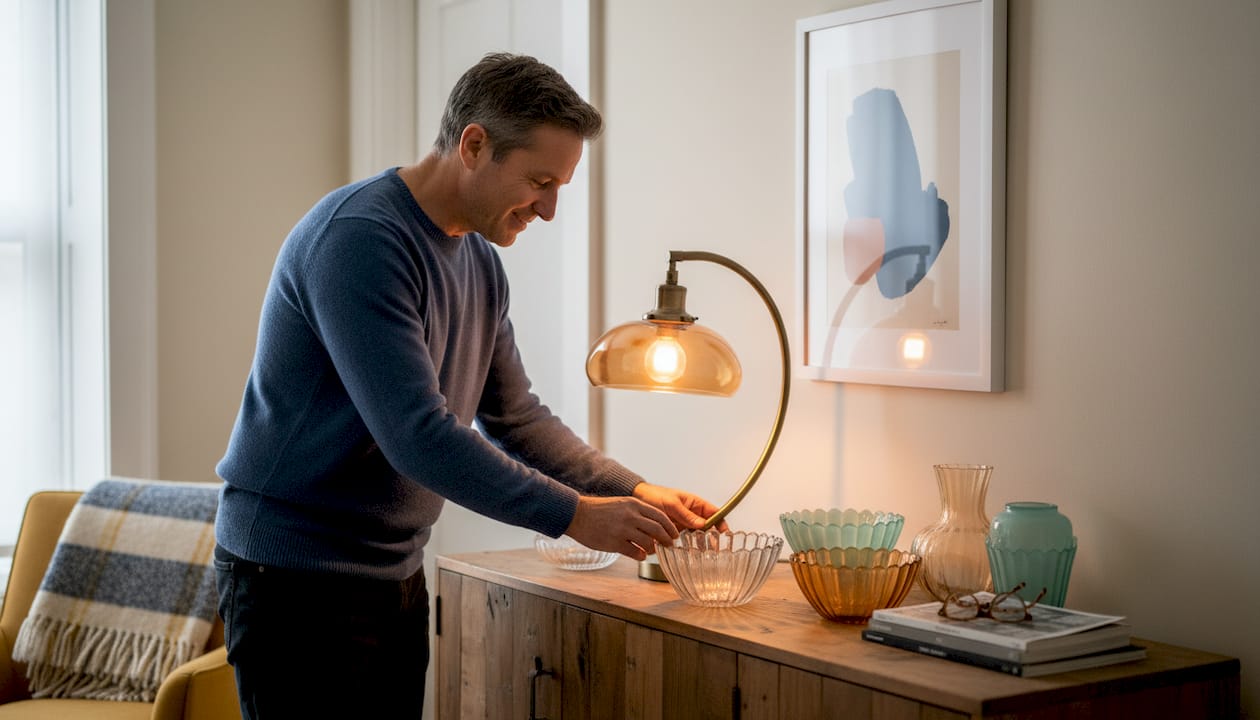
Not every room has a picture window or a sunny southern exposure. Basements, interior hallways, and north-facing rooms get very little direct sunlight. But glassware still works in these spaces when you pair it with the right artificial light sources. The key, as lighting experts note, is controlling where light strikes the glass: near daylight sources like windows, or near added light like spotlights and LED backlighting, then using reflective companions to redistribute that glow.
Best artificial lighting and glassware combos:
- Glass bowls with up-lighting: Place a small LED uplight beneath or behind a glass bowl to create a warm glow that radiates upward and outward.
- Clear vases near table lamps: Position a tall clear vase within 12 inches of a table lamp. The lamp illuminates the glass from the side, creating a column of light that draws the eye.
- Glass trays with fairy lights: Layer a string of warm fairy lights underneath a glass tray or inside a large glass bowl. The effect is soft, sparkly, and incredibly warm for evening spaces.
- Glass shelf with LED strip lights: Install a thin LED strip along the underside of a floating glass shelf. Every piece of glass on that shelf will glow from beneath.
- Suncatchers with spotlight: Aim a small directional spotlight at a hanging suncatcher in a room with no window. You won’t get the rainbow prism effect of sunlight, but the light scatter is beautiful.
For the best results, explore modern statement lamps that pair beautifully with glass arrangements, since the lamp’s shape and finish also contribute to the overall light quality.
A critical note on cleanliness: Even a thin layer of dust on glass will reduce its reflective quality significantly. Before you assess whether your glassware arrangement is working, clean every piece with a lint-free microfiber cloth. You may be surprised how much brighter a freshly cleaned vase or bowl appears compared to one that has been sitting on a shelf for a few weeks.
You can also use statement glassware as a focal point in a dark room, building your lighting setup around a single dramatic piece rather than scattering many small items.
Pro Tip: Try using a warm amber LED bulb in a lamp positioned behind a cluster of clear glass pieces. The amber light passes through the glass and spreads a candlelit glow across your walls, which is perfect for living rooms and dining spaces in the evening hours.
Finishing touches: Suncatchers and unique glass decor accents
With your main lighting boosted, a few finishing details can elevate your space even further.
The big pieces, your vases, trays, and mirrors, are doing the heavy lifting. Now it’s time for the details that make a room feel truly special. Suncatchers, colored glass sculptures, and artisan glass accents add personality while continuing to work hard as light tools.
Vibrant suncatchers hung in a sunny window don’t just look magical; they scatter colorful light across nearby walls throughout the day. The angle of that scattered light changes hour by hour, so you get a constantly shifting display without ever moving a single piece.
Finishing touch ideas for every room:
- Mantelpiece: Cluster three to five glass pieces in different heights and textures. Include one colored piece for warmth and let the group catch firelight or lamp glow.
- Entryway console: A single tall clear vase with branches or botanicals, placed next to a mirror, creates a bright and welcoming first impression.
- Bookshelves: Tuck glass bottles, small sculptures, or decorative glass paperweights between books. These small pieces catch ambient light throughout the day.
- Bathroom windowsill: A row of colored glass bottles on a bathroom window transforms morning sunlight into a small art installation.
- Bedroom dresser: One elegant glass bowl or a set of small glass votives near a bedside lamp adds a soft, reflective glow for evening reading.
According to glass decor research, reflective glass surfaces can help bounce light around a space, making even secondary areas of a room feel brighter and more open. The impact multiplies when you transform your space with a mix of functional and purely decorative glass pieces working together.
Pro Tip: Layering small glass pieces in front of larger ones on a shelf creates depth and a sparkling “diamond” effect when light hits the arrangement. Try placing a small clear bowl in front of a tall vase and watch how the layers interact with each other when the light shifts.
What most decor guides miss about glassware and brightness
Most how-to articles focus on what to buy. This one is different, because here is the honest truth: the arrangement matters far more than the price tag.
You could spend hundreds on a single stunning piece of handblown glass, and if it sits in a dim corner with no light source nearby, it will not brighten your room by a single lumen. Meanwhile, a five-dollar clear glass vase sitting on a sunny windowsill can light up an entire wall. The placement, not the price, is doing the work.
The most overlooked variable is also the simplest: angle. A mirror tilted even slightly changes which surface it reflects light toward. A vase moved two inches closer to a lamp can suddenly create a full glow where there was none. Small adjustments have outsized effects, which means experimenting in your own space is worth more than any design rule you read online.
This is why real decorating feels more like cooking than following a blueprint. You taste as you go. You move a piece, step back, and decide if it’s working. The methodology that consistently delivers results is straightforward: control where light strikes the glass, whether near a window or near a lamp, and then use mirrors and other reflective surfaces to send that light where you need it most.
Quick experiments to try with your own glassware right now:
- Move your tallest clear vase to the windowsill for one day and notice the difference
- Tilt a mirror five degrees toward your glass arrangement and watch what changes
- Place a small LED candle inside a glass bowl in your darkest corner for an instant transformation
- Swap one opaque vase for a clear one on your coffee table and compare the ambient feel
Once you see what unique statement glassware can do when placed intentionally, you start looking at every room with fresh eyes. The light was always there. You just needed the right tools to redirect it.
Brighten your home with artisan glassware and lighting
Ready to put these ideas into practice with pieces that are truly worth displaying?
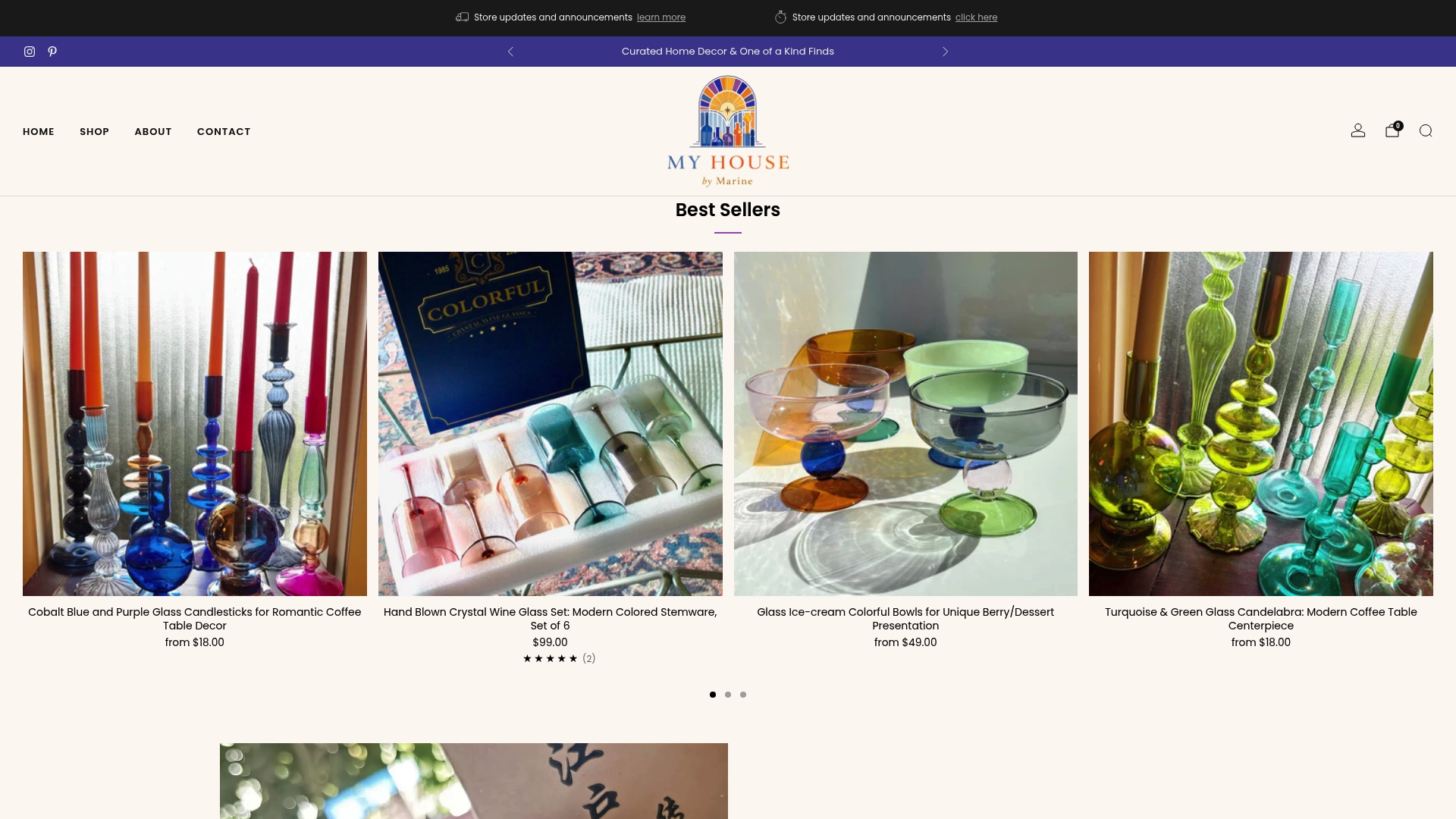
Our luxury glassware collection features one-of-a-kind handmade pieces that double beautifully as decor. From bold, colorful tumblers to elegant clear vessels, each piece is designed to catch and play with light in its own unique way. If you want something truly special, our hand blown crystal glasses are stunning as functional glassware and even more stunning as decorative accents near a window or lamp. Pair any of these with our curated designer lighting options to complete your setup and bring your brightest room vision to life.
Frequently asked questions
Do clear or colored glass items work better for brightening a room?
Clear glass typically enhances overall brightness more effectively, but colored glass adds warmth and visual interest when positioned where direct light can pass through it, per glass decor guidance. The best approach is using both types together for a layered effect.
What’s the best spot to place glassware for maximum light?
Opposite or adjacent to windows is the most effective position, since daylight can hit and reflect directly from the glassware. As noted in room brightening research, pairing glass decor with mirrors in these positions amplifies the result significantly.
How do I keep glassware dust-free for the brightest effect?
Regularly dust and wipe glass surfaces with a microfiber cloth to prevent buildup that dulls the sparkle. Even light dust can noticeably reduce how much light a piece reflects.
Can I use mirrors and glass decor together, or is that too much?
Mirrors and glass decor used together can greatly boost a room’s brightness, especially when both are placed strategically to reflect natural or artificial light. The key is keeping the arrangement intentional rather than random.
Is glassware safe to use in homes with kids or pets?
Choose heavy, stable pieces and position them out of high-traffic areas to minimize risk. Opt for lower, flat arrangements like glass trays over tall, top-heavy vases in busy family spaces.
Recommended
- Transform your space: The role of glassware in modern decor – My House by Marine
- Statement glassware: elevate your home with unique pieces – My House by Marine
- Explore unique modern glassware: top artistic picks 2026 – My House by Marine
- How to Style a Centerpiece with Luxury Glassware – My House by Marine

