

Your dining table deserves better than a tired candle trio or a grocery store flower bunch stuffed into a random vase. If your tablescapes have started to feel a little predictable, you’re not alone. Most people skip the foundational step that transforms an average arrangement into something genuinely stunning: choosing the right glassware first. Think of it like building a great meal around a signature ingredient. When you anchor your centerpiece with a beautiful, intentional piece of luxury glassware, everything else falls into place. This guide walks you through every step, from gathering your materials to assembling a finished centerpiece that feels curated, personal, and completely your own.
Table of Contents
- Gather your centerpiece essentials
- Anchor the design: Choosing and placing glassware
- Build visual interest: Layering plates, linens, and decorative elements
- Centerpiece assembly: Arranging for balance, height, and conversation
- Troubleshooting and top tips: Avoid common centerpiece mistakes
- Expert perspective: Why centerpiece curation matters more than ever
- Find your signature style with artisan glassware and decor
- Frequently asked questions
Key Takeaways
| Point | Details |
|---|---|
| Glassware is the anchor | Start with luxury or artisan glassware as the foundation of your centerpiece. |
| Balance height and space | Keep arrangements under 12 or over 24 inches to foster conversation while creating visual interest. |
| Embrace simplicity | Limit centerpieces to three types of materials for a curated, modern effect. |
| Layer for style | Use plates, linens, and accents with texture to build a cohesive and elegant tablescape. |
| Avoid common pitfalls | Leave open space and try sculptural or asymmetrical layouts to make your centerpiece truly unique. |
Gather your centerpiece essentials
After establishing the value of a cohesive centerpiece, let’s look at what you’ll need to bring your vision to life.
Every great centerpiece starts with a clear inventory of what you’re working with. You don’t need to run out and buy everything at once. In fact, working with what you already own while adding one or two intentional pieces is how the best tablescapes are born.
The single most important category is glassware. According to tablescape design best practices, you should always anchor your tablescape design by starting with luxury glassware. It sets the color palette, the mood, and the overall sophistication of the table. Everything else responds to it.
Here’s a breakdown of the core materials you’ll want to have on hand:
Glassware types to consider:
- Clear crystal or cut glass for a classic, timeless elegance
- Colored art glass for a bold, modern statement
- Frosted or etched glass for a softer, textural look
- Vintage or hand-blown glass for organic, one-of-a-kind character
When you browse luxury glassware essentials, you’ll find a wide range of options that span these styles, from sleek contemporary tumblers to richly colored hand-blown pieces that double as sculptural art.
Supporting materials to gather:
- Plates and chargers in complementary tones
- Linen napkins or a table runner for warmth and texture
- Accent elements like fresh fruits, candles, or small ceramics
- Seasonal branches, botanicals, or dried grasses
Tools you’ll actually use:
| Tool | Purpose |
|---|---|
| Floral scissors or clippers | Clean cuts for stems and botanicals |
| Flower frogs or pebbles | Mechanics for holding stems in place |
| Low trays or risers | Creating height variation |
| Twine or raffia | Bundling arrangements loosely |
Pro Tip: Before buying anything new, lay out what you already own on your table. You may discover that one standout piece of statement glassware inspiration pulls the whole arrangement together on its own.
Artisan glassware carries a functional purpose beyond decoration. It signals intention. When guests sit down and see a beautifully crafted glass centerpiece alongside their place settings, they feel cared for. That’s the power of handpicked, well-considered materials over a generic store-bought set.
Anchor the design: Choosing and placing glassware
With your essentials assembled, your first focus should be on the foundation, which is your luxury glassware.
Choosing the right glassware is less about finding something expensive and more about finding something with personality. A clear, cut-crystal decanter communicates formal elegance. A cluster of hand-blown tumblers in cobalt and amber says warm, creative, and inviting. Neither is wrong. The key is that your glassware choice should reflect the mood you want your table to carry.
Here’s a quick comparison to help you decide which style fits your vision:
| Style | Best for | Mood it creates |
|---|---|---|
| Clear crystal | Formal dinners, weddings | Refined, elegant, timeless |
| Colored art glass | Casual gatherings, brunch | Playful, vibrant, artistic |
| Vintage or hand-blown | Bohemian or eclectic tables | Warm, personal, soulful |
| Modern matte glass | Contemporary interiors | Clean, minimal, sophisticated |
Once you’ve selected your glassware, placement is everything. Glassware as an anchor elevates even a modest centerpiece to feel luxurious, and functionality is a key part of why. Glassware that people can actually use, or at least recognize as functional, connects decoration to real living.
Here’s how to place your glassware for maximum impact:
- Start at the center. Place your tallest or most striking glass piece at the midpoint of the table.
- Build outward. Cluster smaller pieces around the focal point, varying height slightly.
- Decide between symmetry and asymmetry. Symmetry feels formal and controlled. Asymmetry feels organic and modern.
- Leave breathing room. Don’t crowd your glassware. Negative space around pieces makes each one feel more intentional.
- Test sightlines. Sit in a chair at the table and look across. Can you see the person opposite? Adjust height as needed.
The colorful glassware options available in hand-blown tumbler sets work beautifully for an asymmetric cluster arrangement, especially when you mix two or three coordinating colors rather than a single uniform shade. And if you’re leaning toward something more elevated, modern colored stemware in a set of six creates a cohesive row placement that feels like something from a high-end restaurant.
Pro Tip: When in doubt, odd numbers always look more natural. A grouping of three or five glass pieces feels more intentional than two or four.
Build visual interest: Layering plates, linens, and decorative elements
Once your glassware is artfully anchored, start bringing in supporting layers to heighten visual interest.
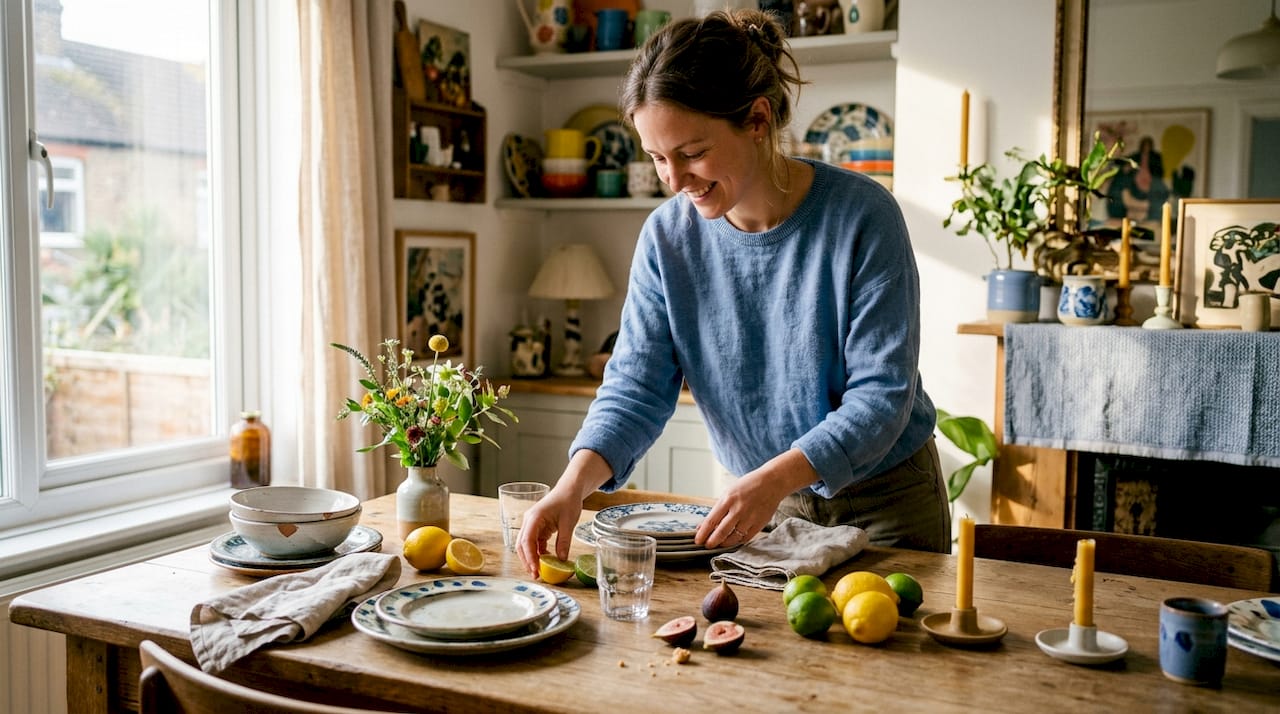
Layering is where the real magic happens. Think of this stage as adding warmth and depth to a painting that already has its focal point. Your glassware is the star. Everything else exists to frame and support it.
Start with plates and chargers. These create a visual foundation that grounds your table. A dark charger under white dinnerware creates crisp contrast. A natural rattan charger under simple white plates adds texture and a relaxed, organic quality. The key is that your plate and charger choice should complement your glassware without competing with it.
Add your linens next. A table runner placed down the center of the table ties the arrangement together horizontally and adds softness to what could otherwise feel like a collection of hard objects. Linen napkins folded neatly beside each place setting reinforce the sense of care and detail. As tablescape designers recommend, you should layer your plates, flatware, and linens before adding your centerpiece elements, so that the centerpiece sits on top of a cohesive, finished base.
“The layers beneath the centerpiece are just as important as the centerpiece itself. They’re the backdrop that makes everything above them shine.”
Accent elements are your finishing details. Fresh lemons or figs nestled at the base of a glass cluster add color and a natural feel. A cluster of votives or taper candles in glass holders extends the glassware theme while adding ambient warmth. Small ceramic bowls, artisan salt cellars, or hand-painted objects bring a personal, handmade quality that elevates the whole table.
The approach of layering decor like a designer applies directly here. You’re building a visual story from the bottom up, with each layer adding new information about your personal style.
One critical rule to keep in mind: always leave functional space for your guests. A centerpiece that crowds the table or forces guests to move things to pass dishes is a problem, no matter how beautiful it looks. Style and function should always coexist.
Quick checklist for this stage:
- Chargers or plates placed at each setting
- Runner or placemats running down the center
- Linens folded at each place
- Accent elements positioned without blocking reach or sightlines
- Candles placed safely away from flammable textiles
Centerpiece assembly: Arranging for balance, height, and conversation
The finishing touch is assembling your centerpiece with attention to both style and functionality.
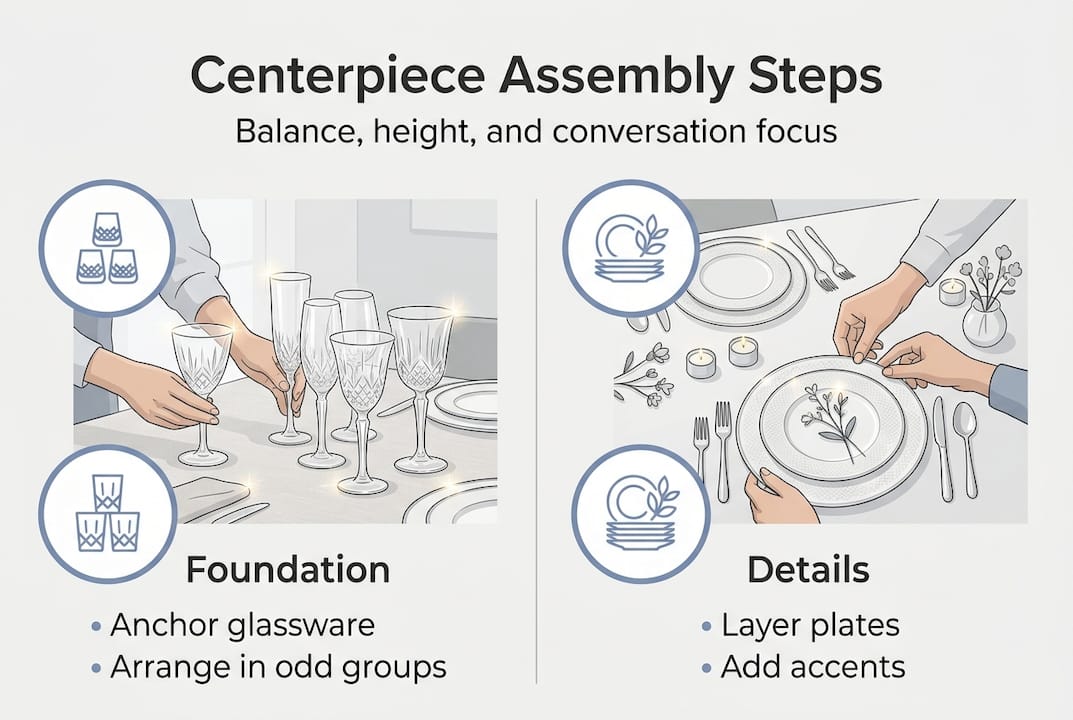
This is where all your planning comes to life. Assembly is less about following rigid rules and more about trusting your eye while keeping a few key principles in mind.
Step-by-step assembly:
- Place your glassware cluster first in the position you’ve already decided on.
- Add your plate and linen layers around the outside of the glassware zone.
- Bring in your florals or botanicals, working them in and around the glassware rather than replacing it as the focal point.
- Add your accent elements last, filling gaps and adding visual texture without overcrowding.
- Step back and assess. Walk around the table. Look from every angle and from seated height.
Height variation is one of the most important technical choices you’ll make. Centerpiece height should be kept either under 12 inches or over 24 inches to avoid blocking conversation across the table, and mixing low compotes with tapers or votives is a great way to create dynamic height while keeping sightlines clear. This is one of those rules that sounds simple but makes an enormous visual difference.
For a more contemporary, sculptural look, consider the approach used in Ikebana, the Japanese art of flower arrangement. Ikebana-inspired arrangements embrace asymmetry and negative space for a sculptural effect, and the best results come from limiting your arrangement to just three materials. That restraint is what makes the design feel intentional rather than busy.
A simple three-material example might be: a hand-blown glass vase, three stems of a single flower variety, and a cluster of smooth river pebbles at the base. That’s it. Three elements, beautifully arranged, using intentional space.
Pro Tip: Before committing to a final arrangement, take a photo of it on your phone. Looking at it through a screen rather than in person helps you spot imbalances you might have missed while standing over the table.
Height guide at a glance: Under 12 inches: Low, open, conversation-friendly. Great for intimate dinners. Over 24 inches: Dramatic and architectural. Best for large formal tables or buffets.
The goal is a table where your statement glassware anchors the eye, height variation creates drama, and the whole arrangement invites people to sit down and stay a while.
Troubleshooting and top tips: Avoid common centerpiece mistakes
Even the best-planned arrangements can go wrong, so here’s how to avoid the most common mishaps.
Most centerpiece problems come down to one thing: too much. Too many materials, too much height in the wrong places, too many colors competing for attention. The fix is almost always to remove something rather than add something new.
Common mistakes and how to fix them:
- Overcrowding. If your table looks busy or chaotic, take out one category of element entirely.
- Awkward heights. If your arrangement lands right at eye level when seated, restructure it to go lower or higher.
- Ignoring negative space. Empty space is not a mistake. It gives the eye somewhere to rest and makes each element more visible.
- Too many materials. Using five or six different textures and colors creates visual noise. Cap yourself at three to four max.
- Ignoring the rest of the room. Your centerpiece should relate to your broader interior, not clash with it.
When it comes to mechanics like flower frogs, glass pebbles, or floral wire, don’t automatically hide them. Visible mechanics can be a deliberate design choice for sculptural setups, especially in modern or minimalist arrangements where the structure itself becomes part of the aesthetic.
One of the smartest styling troubleshooting tips is to think of your centerpiece as a modular system. Keep your glassware and any durable decorative objects year-round, and simply swap out the perishable or seasonal elements. A cluster of beautiful glass tumblers works in winter with pinecones and candles, and in summer with fresh citrus and green herbs. You don’t need a new centerpiece for every season. You need a few great anchor pieces and a rotating cast of supporting elements.
Pro Tip: Keep a small “centerpiece box” in a closet with seasonal accents: dried botanicals, small candles, decorative stones, a few interesting ribbon lengths. Refreshing your table becomes a 10-minute project instead of a full afternoon.
Expert perspective: Why centerpiece curation matters more than ever
There’s a quiet shift happening in how people think about their homes, and the dining table is right at the center of it. Entertaining used to be about perfection: matching everything, hiding all the mess, setting a table that looked like it came from a department store catalog. Now, the tables that people actually remember and photograph are the ones that feel personal.
A curated centerpiece with unique glassware perspectives doesn’t signal that you hired a designer. It signals that you paid attention. You thought about color, texture, and height. You chose objects that mean something to you. That intentionality is what guests feel, even if they can’t name exactly why the table looks so good.
Mixing contemporary glassware with handmade or artisan accents gives your table something that mass-produced decor simply can’t: soul. One hand-blown glass piece surrounded by a few well-chosen natural elements will always outperform a perfectly matched set from a big box store. The imperfection is the point. It’s what makes the table yours.
Find your signature style with artisan glassware and decor
Ready to start building a centerpiece that genuinely reflects your style? Your first step is finding the right anchor pieces.
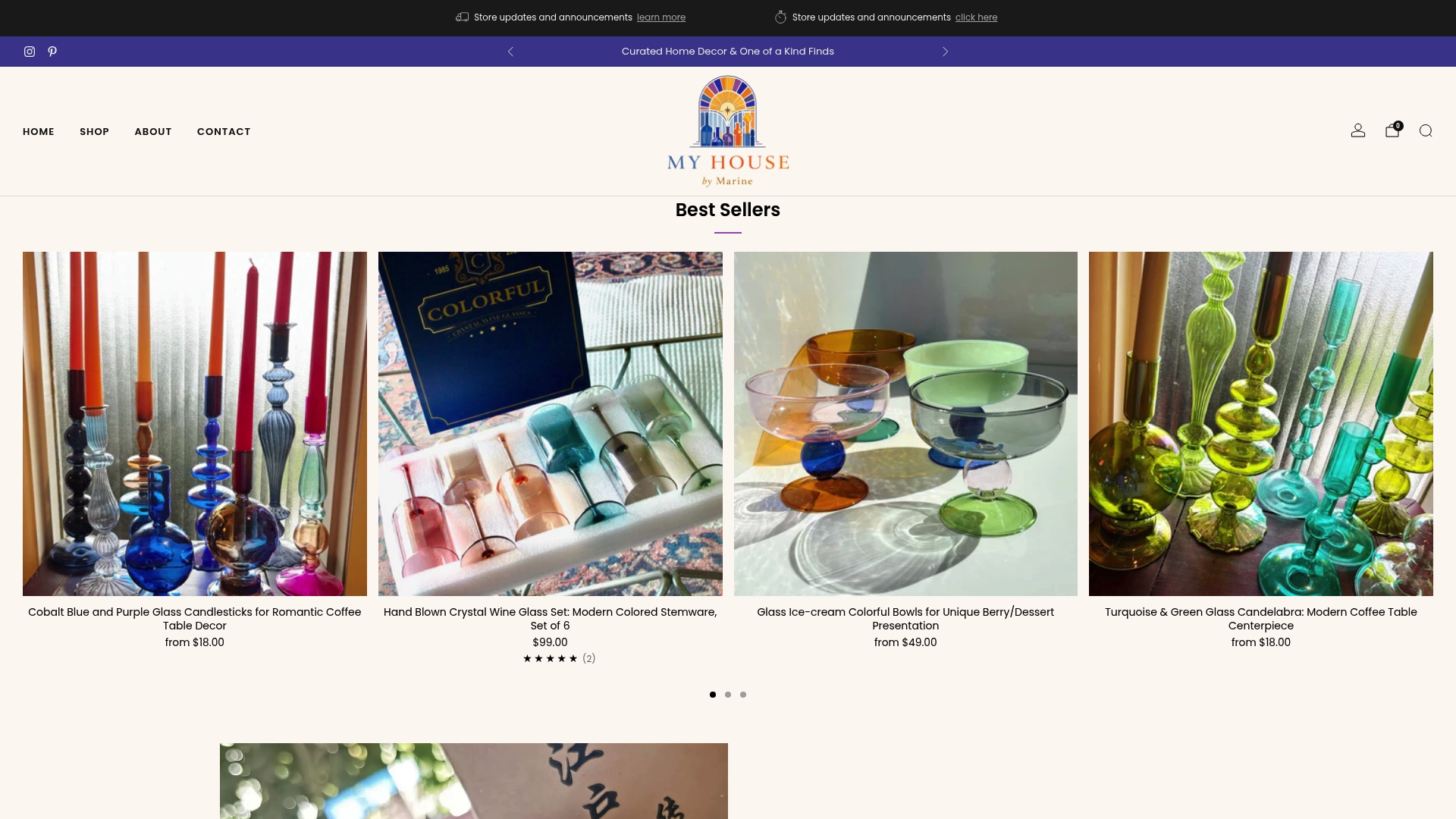
At My House by Marine, you’ll find a carefully curated selection of contemporary luxury glassware, one-of-a-kind handmade decor items, and unique accent pieces that make centerpiece styling feel effortless. Whether you’re looking to shop artisan glassware for your next dinner party or want to explore the vibrant personality of hand-blown colorful tumbler sets, there’s something for every aesthetic and table size. You can also browse the unique decor gifts section for seasonal collections and curated gift sets that make styling your home genuinely exciting.
Frequently asked questions
What’s the ideal height for a dining table centerpiece?
A centerpiece should be either under 12 inches or over 24 inches tall to keep conversation flowing easily across the table without visual obstruction.
How many types of materials should I use for a modern centerpiece?
Limiting your arrangement to three different materials creates a clean, harmonious look that feels contemporary rather than cluttered.
Is visible floral mechanics a design mistake or a trend?
Visible mechanics are now a deliberate design choice in sculptural and Ikebana-inspired arrangements, where the structure adds to the visual interest rather than detracting from it.
Can I style a centerpiece without fresh flowers?
Absolutely. Fruits, seasonal branches, artisan objects, candles, and even a single striking piece of decorative glass can create a centerpiece that’s just as beautiful and far longer-lasting.
What’s the first step in styling a luxury tablescape?
Always begin by selecting and placing your glassware, since anchoring with luxury glassware establishes the tone, palette, and cohesion for everything that follows.
Recommended
- Luxury Glassware & Elegant Artisan Drinkware | My House By Marine – My House by Marine
- Statement glassware: elevate your home with unique pieces – My House by Marine
- Hand Blown Luxury Ombré teal Crystal Glasses for the Contemporary Tabl – My House by Marine
- Turquoise & Green Glass Candelabra Set | Modern Candle Holders – My House by Marine

