

Finding a centerpiece that actually reflects your personality is harder than it sounds. Most stores carry the same predictable options, and scrolling online for hours rarely turns up anything worth a second look. Whether you’re refreshing a dining table, styling a coffee table, or searching for a gift that genuinely impresses, you deserve something with real character. This article walks you through four creative, handmade centerpiece approaches, from living plant displays to ikebana-inspired arrangements, with practical tips on choosing the right fit for your space, your style, and the occasion.
Table of Contents
- How to choose the perfect centerpiece for any space
- Living plant centerpieces: Fresh, low-maintenance style
- Water bead vases: Floating stems and optical illusions
- Ikebana-inspired centerpieces: Minimalist, artistic arrangements
- Editorial take: Why bold, handmade centerpieces outshine mass-market picks
- Find artisan centerpiece pieces and decor for your next celebration
- Frequently asked questions
Key Takeaways
| Point | Details |
|---|---|
| Criteria-driven selection | Choosing the right centerpiece starts with matching height, visibility, and style to your space. |
| Handmade plant displays | Glass vase plant centerpieces offer stylish, low-maintenance alternatives for living rooms and gifts. |
| Avant-garde water bead vases | Water beads create striking floating effects that elevate modern, luxury table settings. |
| Minimalist ikebana arrangements | Ikebana-inspired centerpieces use negative space and simplicity to deliver artistic impact. |
| Gift-worthy artisan pieces | Handcrafted bowls, trays, and decor items make memorable centerpieces and thoughtful gifts. |
How to choose the perfect centerpiece for any space
Think of choosing a centerpiece like following a recipe. You need the right ingredients in the right proportions before anything comes together. Start by assessing where the centerpiece will live. A dining table calls for a different approach than a coffee table or a gift presentation. Each setting has its own rules around scale, visibility, and social function.
Here are the key criteria to run through before you shop or create:
- Scale and height: A centerpiece that towers over guests blocks conversation and kills the mood at dinner.
- Visibility: Your arrangement should draw the eye without overwhelming the rest of the table.
- Style compatibility: Minimalist spaces pair well with clean lines and neutral tones. Bold, eclectic rooms can handle more color and texture.
- Functionality: Consider whether the piece needs to be moved during meals or can stay put as a permanent feature.
- Occasion: A centerpiece for a holiday dinner has different demands than one meant for everyday display.
Using a tray is one of the smartest moves you can make. It groups individual items into a cohesive visual unit and gives your arrangement a clear boundary. A candle, a small vase, and a decorative object on a bare table can look scattered. Put them on a tray and suddenly they become an intentional arrangement. A modern glass candelabra centerpiece works especially well as an anchor piece on a tray, combining visual height with handmade elegance.
“Keep centerpieces low for dining to maintain eye contact; use trays for cohesion.”
Pro Tip: Keep centerpieces under 12 inches for dining tables so guests can see each other clearly and conversation flows naturally.
Balancing style with function is the final piece of the puzzle. A minimalist look calls for one strong focal object. A bolder aesthetic welcomes layering. Once you know your space and style, the rest of the decisions come much more easily.
With criteria in mind, let’s explore centerpiece ideas that combine creativity and handcrafted appeal.
Living plant centerpieces: Fresh, low-maintenance style
If you want a fresh, organic focal point, living plant centerpieces are a stylish, modern route. The best part? You can skip the soil entirely. Glass vases filled with water and white pebbles let you display living plants in a way that feels contemporary and clean.
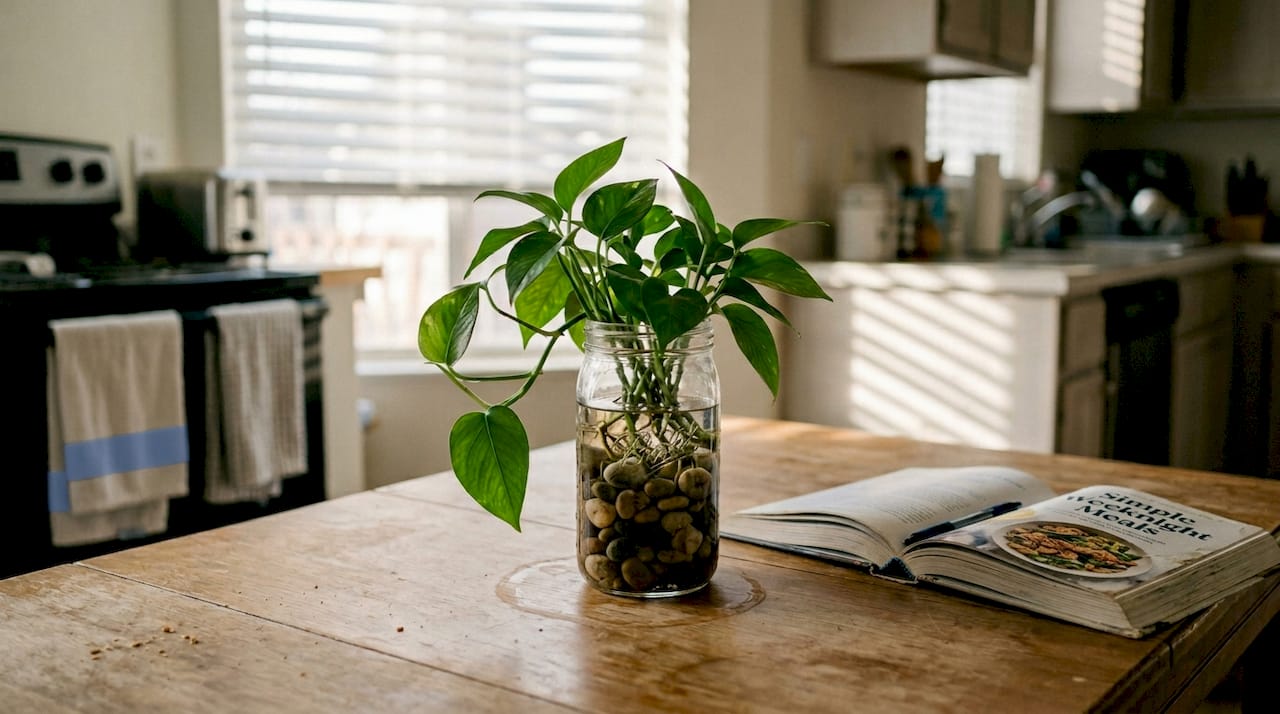
Snake plants in glass vases with white pebbles create low-maintenance, contemporary displays without any soil mess. They bring bold vertical lines and a sculptural quality that suits modern interiors beautifully. Philodendron and pothos are equally good choices, trailing softly over the sides of a vase for a more relaxed, organic look.
Here is a simple step-by-step for creating a soil-free plant centerpiece:
- Choose your vessel. A clear glass vase works best because it shows off the roots and pebbles. A concrete bowl for indoor plants offers a more earthy, artisan alternative.
- Add white pebbles or river stones to the bottom third of the vessel. These anchor the plant and add visual texture.
- Rinse the plant roots thoroughly to remove all soil before placing the plant in the vessel.
- Fill with water to just below the pebble line, keeping roots submerged but stems dry.
- Place in indirect light for best results. Most tropical varieties thrive in bright, indirect light.
- Change the water weekly to prevent buildup and keep the display looking fresh.
The maintenance is genuinely minimal. A weekly water change takes about two minutes and keeps roots healthy and the display looking pristine. This makes living plant centerpieces ideal for anyone who loves the look of greenery but doesn’t have time for high-maintenance plants.
Pro Tip: Place your plant display on a nature-inspired glass mosaic tray to instantly elevate the arrangement and tie it into a cohesive table story.
Living centerpieces also make exceptional gifts. A pothos in a beautiful handmade vessel is personal, practical, and genuinely memorable. That combination is hard to beat.
Water bead vases: Floating stems and optical illusions
For those looking for an artful twist, water bead vases offer an unexpected centerpiece solution. Water beads, sometimes called Orbeez or gel beads, are small polymer spheres that absorb water and expand into smooth, jewel-like balls. When you fill a glass vase with them and add flower stems, the effect is striking.
Water bead hacks in glass vases create floating illusions for stems, stabilizing them and adding an avant-garde luxury feel without the price tag. The beads hold stems upright without the need for floral foam, which means your flowers stay centered and secure even in wide-mouthed vases.
Here is what works well in a water bead arrangement:
- Tulips and roses: Their sturdy stems sink cleanly into the beads and stay upright.
- Calla lilies: Elegant and architectural, they look stunning against clear or tinted beads.
- Single-stem orchids: Dramatic and minimal, perfect for a contemporary table.
- Willow or bamboo branches: Add height and movement without competing with the bead effect.
| Bead color | Best stem pairing | Mood created |
|---|---|---|
| Clear | White roses or orchids | Clean, modern, airy |
| Blue or teal | Calla lilies or iris | Cool, sophisticated |
| Blush or rose | Pink tulips or peonies | Romantic, soft |
| Charcoal | Dark dahlias or protea | Dramatic, editorial |
The visual and tactile appeal of water beads is genuinely hard to replicate with any other medium. Guests inevitably want to touch them. That sensory experience makes your table feel intentional and curated. Pairing your bead vase with hand-painted ceramic plates creates a table setting that feels layered and cohesive.
Pro Tip: Mix two complementary bead colors in the same vase for a customized gradient effect. It takes about 30 seconds of extra effort and makes the arrangement look far more complex and intentional.
Ikebana-inspired centerpieces: Minimalist, artistic arrangements
Finally, artisanal floral arrangements inspired by ikebana provide a refined, contemplative centerpiece option. Ikebana is the Japanese art of flower arranging, and it operates on principles that feel almost opposite to a classic Western bouquet.
Ikebana-style arrangements emphasize asymmetry, negative space, strong stems like calla lilies, and the idea that an arrangement should evolve beautifully over time as elements age. Where a traditional bouquet fills every inch of space, ikebana leaves room to breathe. That negative space is not emptiness. It is an intentional design element that makes each stem feel more significant.
The core principles to follow:
- Use a maximum of three materials. One primary stem, one secondary element, and one accent. More than three and you lose the simplicity that makes ikebana powerful.
- Embrace asymmetry. Off-center arrangements create tension and visual interest.
- Let stems be visible. Unlike dense bouquets, ikebana celebrates the line of the stem as part of the composition.
- Allow evolution. As petals drop or stems shift, the arrangement changes. That is part of the beauty.
| Feature | Traditional bouquet | Ikebana-inspired |
|---|---|---|
| Stem count | Many | Three or fewer |
| Symmetry | Usually centered | Intentionally asymmetric |
| Negative space | Minimal | Central to the design |
| Vase shape | Round, dense | Wide, low, or angular |
| Visual mood | Lush, abundant | Refined, contemplative |
For vase selection, wide, shallow vessels or angular ceramic pieces work best. An abstract ceramic platter for ikebana can serve as an unexpected but beautiful base for a minimalist stem arrangement.
“Embrace negative space. It is not what you add that defines the arrangement. It is what you choose to leave out.”
Ikebana-inspired arrangements reward patience and restraint. If you have ever felt frustrated arranging flowers because you keep adding stems and it still looks wrong, this approach might change everything for you.
Editorial take: Why bold, handmade centerpieces outshine mass-market picks
With these creative centerpiece options explored, let’s step back and consider why bold, handmade touches matter most in contemporary spaces.
Mass-produced centerpieces are everywhere, and that is exactly the problem. When your table looks like it was assembled from the same catalog as everyone else’s, it says nothing about you. Handmade pieces are different. They carry evidence of someone’s hands, decisions, and creative choices. That story is visible in an uneven glaze, a hand-cut mosaic tile, or a one-of-a-kind glass form. Guests feel it even if they cannot name it.
Bold, unconventional designs also do something that safe, predictable ones never manage: they start conversations. A water bead vase full of floating orchid stems makes people ask questions. An ikebana arrangement on a tray invites comments. That conversational energy transforms a meal or a gathering.
For gift occasions, originality carries even more weight. A handmade colored glass vase or an artisan tray is not just a gift. It is a statement that you took the time to find something real. That distinction matters more now than it ever has.
Find artisan centerpiece pieces and decor for your next celebration
Ready to bring one of these ideas to life in your own space?

Our unique home decor collection features one-of-a-kind handmade bowls, trays, vases, and statement pieces curated for contemporary living. If you’re shopping for a gift, our gift sets for centerpiece ideas are perfect for hosts, holidays, and any occasion that deserves something more memorable than the ordinary. And if a standout tray is what your arrangement needs, our stained glass mosaic tray is one of our most-loved pieces for anchoring a beautiful centerpiece grouping. Every item ships with the care and intentionality it deserves.
Frequently asked questions
What plants work best for soil-free centerpiece displays?
Snake plants, philodendron, and pothos thrive in glass vases with water and pebbles, needing only weekly water changes to stay healthy and looking great.
How do water beads enhance centerpiece design?
Water beads stabilize stems and create a floating illusion, adding contemporary visual appeal to floral arrangements without floral foam or complex mechanics.
What makes ikebana arrangements unique compared to traditional bouquets?
Ikebana centerpieces use asymmetry, visible stems, and negative space for minimalist elegance, evolving artistically over time rather than aiming for a static, abundant look.
How tall should a centerpiece for dining tables be?
Keep dining table centerpieces under 12 inches high to maintain comfortable eye contact across the table and encourage natural conversation throughout the meal.
Recommended
- Unique Home Decor Guide: Transform Your Space in 5 Steps – My House by Marine
- Unique housewarming gifts: Handmade sets & glassware 2026 – My House by Marine
- Turquoise & Green Glass Candelabra Set | Modern Candle Holders – My House by Marine
- How to Style Decor Pieces That Work Together | My House by Marine

