

You’ve found a gorgeous vintage mirror at a flea market, a set of hand-painted dishes, and a quirky brass lamp. But the moment you bring them home, something feels off. The pieces look cluttered rather than curated, mismatched rather than charming. Sound familiar? You’re not alone. Styling vintage decor is a skill, and like cooking from a recipe, it gets much easier once you understand the steps. This guide walks you through the entire process, from gathering inspiration to adding those finishing personal touches, so your home feels collected, intentional, and completely your own.
Table of Contents
- Gathering vintage inspiration and essentials
- Selecting key vintage pieces
- Arranging and layering with confidence
- Adding personal touches and troubleshooting
- Why vintage decor is more than a style, it’s a story
- Bring vintage style home with unique finds
- Frequently asked questions
Key Takeaways
| Point | Details |
|---|---|
| Start with a plan | Defining your inspiration and gathering materials makes vintage decor styling focused and stress-free. |
| Choose meaningful pieces | Select items that resonate with you and suit your space for a home that feels collected, not cluttered. |
| Layer confidently | Mix vintage and modern elements, playing with heights and groupings for a polished, livable look. |
| Personalize and adapt | Make your vintage decor truly yours with DIY touches and adjustments for your unique style. |
Gathering vintage inspiration and essentials
Now that you’re ready to personalize your home, let’s begin by gathering ideas and the right tools to get started.
Vintage styling works best when it starts with a clear vision. Before you buy a single item, spend time collecting inspiration. Browse local flea markets, antique shops, and estate sales. Scroll through design blogs, Pinterest boards, and vintage-focused Instagram accounts. Pay attention to what draws your eye again and again. That pattern is your style compass.
As curating a home starts with inspiration and intention, the goal is to build a room that feels collected, not just decorated. Think about the era you’re drawn to. Are you pulled toward the warm wood tones of mid-century modern? The ornate details of Victorian style? Or a relaxed mix of farmhouse and bohemian? Defining your direction saves you from impulse buys that don’t fit.
Once you have a vision, assemble your practical toolkit. Here’s what you’ll need before you start shopping or arranging:
| Essential | Purpose |
|---|---|
| Measuring tape | Check furniture and wall dimensions before buying |
| Cleaning supplies | Gently restore dusty or grimy vintage finds |
| Display hardware | Hooks, shelves, and plate stands for mounting pieces |
| Moodboard (digital or physical) | Keep your color palette and style references in one place |
| Notebook or app | Track sizes, store names, and price comparisons |
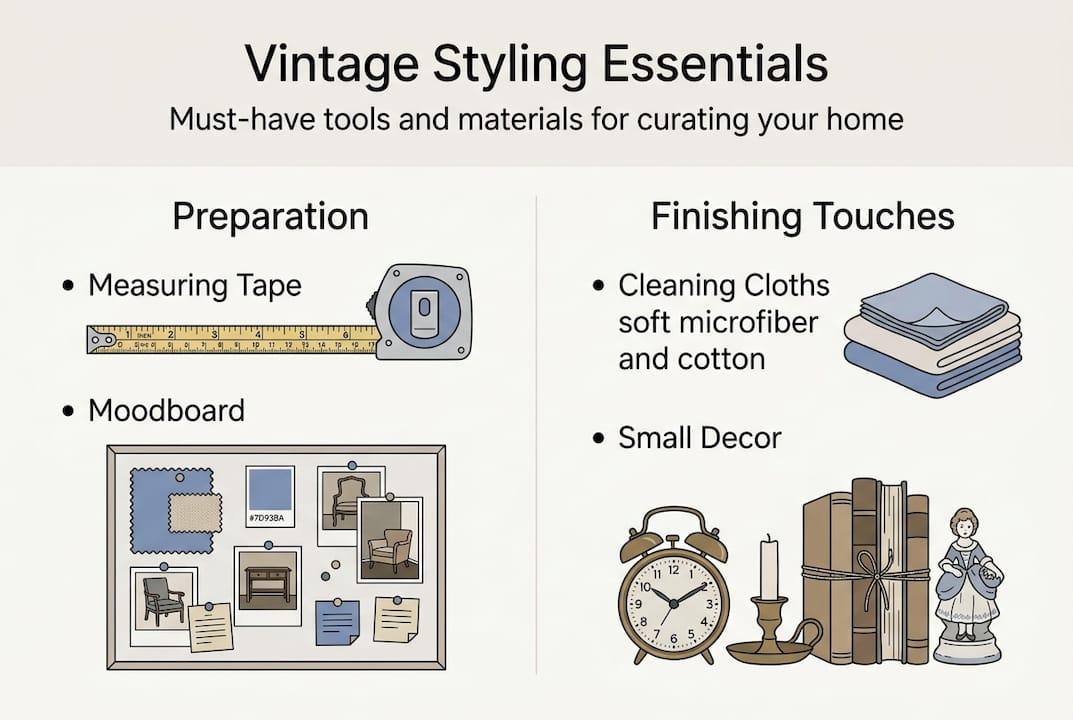
A moodboard is one of the most underrated tools in decorating. Cut out magazine images, save screenshots, and pin paint swatches. When you can see your ideas side by side, it’s much easier to spot what works and what clashes.
Pro Tip: Always measure your wall space, shelves, and tabletops before buying any piece. A lamp that looks modest in a shop can overwhelm a small side table at home.
Once your moodboard is set, browse curated vintage pieces that align with your chosen palette and era to start building your shortlist.
Selecting key vintage pieces
With inspiration in hand, it’s time to carefully select the vintage items that will set your space apart.
Not all vintage pieces are created equal. Some will anchor a room beautifully, while others might fight for attention in the wrong way. Learning to evaluate what you’re looking at makes a huge difference.
Here’s a simple numbered process for choosing wisely:
- Shortlist first. Based on your moodboard, identify 3 to 5 types of items you actually need, such as a mirror, a lamp, or a set of decorative dishes.
- Inspect condition. Look for structural integrity. Minor wear and patina are fine and even desirable. Avoid items with cracks that compromise function or mold that can’t be cleaned.
- Match with your vision. Hold the piece (mentally or physically) up against your moodboard. Does it fit the color story? The era? The scale?
Now think about impact. Some pieces are bold statements, like a large gilt mirror or an ornate floor lamp. Others are quiet supporting characters, like a small trinket box or a stacked set of vintage books. You need both. Trinket boxes and collectible dishes are popular and easy to feature in any room, and they add instant personality without overwhelming a shelf.
Here’s a quick comparison to help you choose the right mix:
| Item | Visual Impact | Maintenance | Versatility |
|---|---|---|---|
| Vintage mirror | High | Low | High |
| Ornate side table | High | Medium | Medium |
| Collectible dishes | Medium | Low | High |
| Framed vintage art | Medium | Low | High |
| Antique lamp | High | Medium | Medium |
Pro Tip: Prioritize pieces that have a story or spark genuine joy. You’ll style them with more confidence and care. Browse curated vintage finds if you want a head start on pieces that have already been selected for quality and character.
Arranging and layering with confidence
Once your vintage treasures are chosen, thoughtful arrangement is the key to letting them shine.
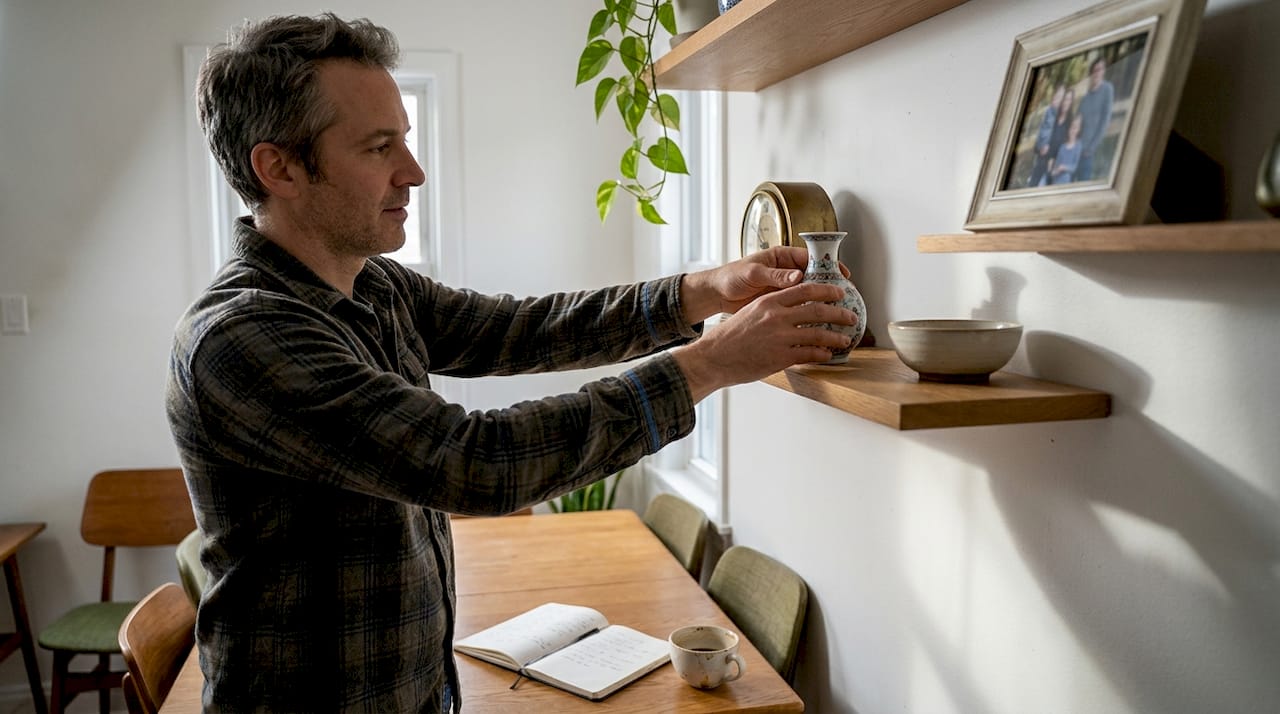
Arranging decor is where many people get stuck. The good news? There are reliable rules that make this process feel much less intimidating. Think of it like building a layered outfit: each piece should relate to the others without competing.
Follow these steps for confident, beautiful arrangements:
- Start with the largest piece. Anchor the display with your biggest item, whether that’s a mirror, a tall vase, or a substantial painting.
- Work down in scale. Place medium items next, then finish with small accents. This creates natural visual flow.
- Use odd numbers. Groups of three or five almost always look better than pairs. It’s a simple trick that adds a natural, organic feel.
- Vary the heights. Mix tall, medium, and low pieces to keep the eye moving and prevent a flat, uniform look.
Vintage pieces rarely need to stand alone. In fact, some of the most beautiful rooms blend vintage and modern elements seamlessly. Here are some pairings that work really well:
- Mid-century ceramic vases alongside clean-lined modern art
- A worn leather journal or antique box next to a minimal lamp
- Vintage framed botanicals above a sleek contemporary console
- Hand-painted dishes displayed on open modern shelving
The prime rule of vintage styling: one consistent element, whether color, material, or era, ties the whole room together. Without it, collections look chaotic. With it, they look curated.
Don’t forget negative space. Leaving breathing room around key pieces actually makes them feel more intentional. For shelf and table displays, refer to tips on styling coffee tables and shelves to build on this framework.
Adding personal touches and troubleshooting
With your display nearly complete, a few thoughtful tweaks and solutions will make your decor unmistakably yours.
This is the step most guides skip, but it’s where the magic happens. Personal touches are what separate a room that looks styled from one that feels lived in and loved.
Here are easy ways to make your vintage display feel personal:
- Upcycle and paint. A tired wooden frame becomes a statement piece with a coat of chalk paint in your accent color.
- Group meaningful collections. Display items that connect to your history, travels, or interests. A cluster of vintage postcards or inherited trinkets tells your story.
- Layer textures. Add a handmade textile, a woven tray, or a dried flower arrangement to introduce warmth and depth.
- Mix handmade with found pieces. Handmade or meaningful vintage decorating tips show that a home is unique when personal items are woven into the decor story.
Now let’s talk about the three most common styling mistakes and how to fix them:
Over-cluttering. If a shelf feels busy, remove one item at a time until it breathes. Less is almost always more with vintage styling.
Color mismatches. If pieces feel disconnected, introduce a unifying element: a small color-repeated accent, a consistent wood tone, or a shared metallic finish.
Under-lighting. Vintage decor loves warm light. A single overhead fixture often kills the mood. Add a table lamp or picture light to bring your displays to life.
Patina, wear, and imperfection are not flaws. They are the proof that an object has lived. That history is exactly what makes vintage decor feel so rich and real.
Pro Tip: Photograph your arrangement on your phone and look at it on the screen. Distance gives you fresh eyes and you’ll immediately notice what’s off.
Why vintage decor is more than a style, it’s a story
Stepping back, let’s consider what makes vintage decor so special and why it’s more than just a passing trend.
Most decorating advice focuses on rules: balance, proportion, color theory. And those things matter. But the real reason vintage decor resonates so deeply is emotional, not aesthetic. When you bring a piece into your home that has lived somewhere else before, you’re not just filling space. You’re connecting to something bigger than a current trend.
We’ve found that the homes people find most memorable are rarely the ones with the most expensive furniture. They’re the ones where every corner seems to hold a question. What is that? Where did it come from? The objects with the most wear and the most history are always the ones that start conversations.
The uncomfortable truth about decorating is this: most people buy things to fill a room, but the homes that feel truly collected not decorated are built slowly, with intention. You can’t rush that. A single meaningful piece, placed with care, beats a dozen trendy items arranged perfectly every time.
Patina is not a flaw to work around. It’s the whole point. The scratch on an old dresser, the faded color of a vintage print, the slight unevenness in a hand-thrown ceramic bowl. These are the details that make a home feel human. Embrace imperfection and your space will feel more welcoming than any showroom ever could.
Bring vintage style home with unique finds
Inspired to curate your own vintage style? Discover special pieces that help tell your home’s story.
At My House by Marine, we hand-select one-of-a-kind pieces that make styling both exciting and effortless. Whether you’re building from scratch or adding finishing touches, our shop is filled with items that fit every step of this guide.
Browse our full range of unique home decor to find pieces that match your color story and era. Looking for those perfect small accents? Our cloisonne trinket collectibles are exactly the kind of meaningful, detailed pieces that bring a display to life. And if you’re shopping for someone who loves beautiful interiors, explore our curated decor gift sets for a thoughtful and stylish option.
Frequently asked questions
How do I start styling with vintage decor if I’m a beginner?
Begin with one or two statement pieces you genuinely love and build your room around them using a color or style theme. Curating a home starts with a few well-chosen pieces, not an entire room at once.
What are the best vintage items for small spaces?
Small collectibles like trinket boxes and collectible dishes are popular and easy to feature in any space, offering big visual impact without taking up much room.
How can I mix modern and vintage pieces without clashing?
Match color palettes and repeat materials across both old and new items to create a cohesive look. Combining vintage and modern elements creates harmonious, lived-in rooms when a unifying thread connects them.
What are fun ways to personalize vintage decor?
Painting, upcycling, and grouping meaningful collections are all great options. Personalizing with handmade or vintage-inspired pieces is what makes a home feel truly unique and personal to you.
Recommended
- How to Curate a Home That Feels Collected, Not Decorated – My House by Marine
- Blog – My House by Marine
- How to Style Coffee Tables, Consoles, and Shelves Like a Designer – My House by Marine
- How to Create a Signature Home Style | My House By Marine – My House by Marine
- Gothic home decorating guide: create dark mystical space – GothMarket
- Decorating With Hanging Prisms at Home – CrystalPlace

