

People are willing to pay 17% more for handmade items simply because of the emotional warmth they carry. That’s not a small difference. It tells you something important: not all home accessories are created equal, and your instinct to seek out something special is backed by real data. Artful home accessories, those crafted by hand with intention and skill, do more than fill a shelf. They carry a story, create a mood, and genuinely change how a space feels. In this article, we’ll walk you through what makes these pieces unique, what benefits they bring, and how to choose the right ones for your home.
Table of Contents
- What makes an accessory artful?
- Benefits of artful home accessories
- Cost versus value: Artful accessories compared to mass-produced decor
- How to select the right artful home accessories
- Our perspective: Why artful accessories are a better investment
- Discover one-of-a-kind artful pieces for your home
- Frequently asked questions
Key Takeaways
| Point | Details |
|---|---|
| Handmade value | Artful accessories offer unique craftsmanship and higher emotional connection. |
| Wellness benefits | Displaying handmade decor can reduce stress levels by making spaces feel more inviting. |
| Better investment | Quality artful pieces often retain value and provide lasting satisfaction over trend-based decor. |
| Smarter gifting | People appreciate and pay more for gifts that are handmade with love and purpose. |
What makes an accessory artful?
With the growing recognition that handmade items are worth more, it’s essential to understand what truly makes an accessory “artful.” The word gets used loosely, but there’s a meaningful difference between a piece that’s decorative and one that’s genuinely artful.
An artful home accessory is unique, made with intention, and shaped by a real person’s skill and perspective. It’s not the result of a factory mold repeated ten thousand times. It reflects choices, like the curve of a bowl, the glaze on a vase, or the texture of a woven piece, that came from a specific maker’s hands. That’s what gives it character.
Mass-produced decor, by contrast, is designed for speed and volume. It looks fine, but it rarely surprises you. When every store carries the same items, your home starts to look like everyone else’s. Artful pieces break that pattern.
Here’s what sets artful accessories apart:
- Uniqueness: No two handmade pieces are identical, even from the same maker.
- Craftsmanship: Each item reflects hours of learned skill, not automated production.
- Material authenticity: Artful pieces often use natural or high-quality materials that look and feel distinctive.
- Maker’s story: Knowing who made something and why adds a layer of meaning that mass production simply can’t replicate.
- Intentional design: Every detail serves a visual or functional purpose chosen by the creator.
Consider how much time actually goes into a handmade piece. Handmade labor can range 30-40 hours per item at a high skill rate, compared to just 2-3 hours for mass-produced alternatives. That’s a dramatic difference in care and attention.
“When you hold a handmade piece, you’re holding someone’s time, focus, and expertise. That’s not something you can replicate with a machine.”
For a deeper look at how to use these pieces in your space, check out this unique home decor guide or explore how accent pieces shape style in a room. Both are great starting points if you’re ready to move beyond generic store displays.
Benefits of artful home accessories
Once you recognize what defines an artful accessory, consider the many personal and environmental benefits they bring into your home.
The most immediate impact is emotional. Handmade accessories signal care and thoughtfulness, both to you and to anyone who visits your space. Guests notice the difference between a curated room and a showroom replica. That perception matters because your home should feel like yours.
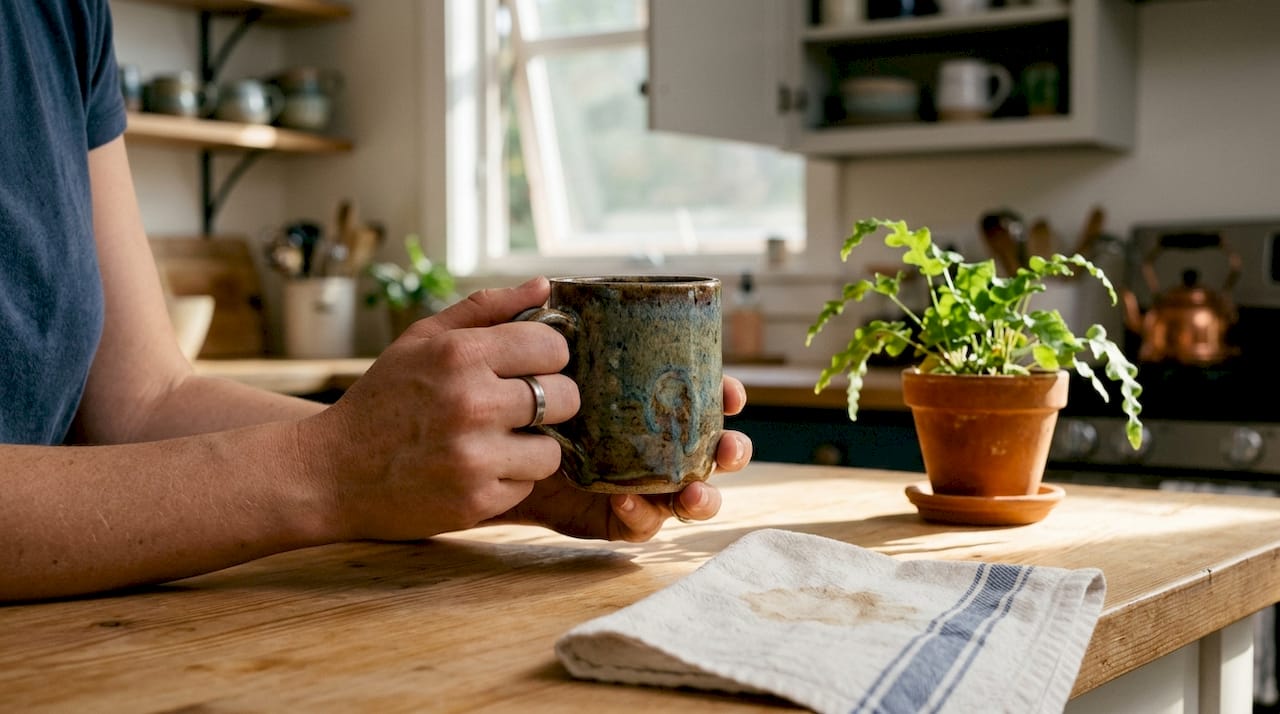
There’s also a measurable stress benefit. Art reduces cortisol, the body’s primary stress hormone, by 15-20% for people in rooms decorated with meaningful pieces. That’s significant. If you spend time working from home, relaxing in your living room, or winding down in your bedroom, the objects around you are actively influencing how you feel.
And on the value side, consumers pay up to 17% more for handmade items because they perceive love and effort embedded in every piece. That perceived value doesn’t fade.
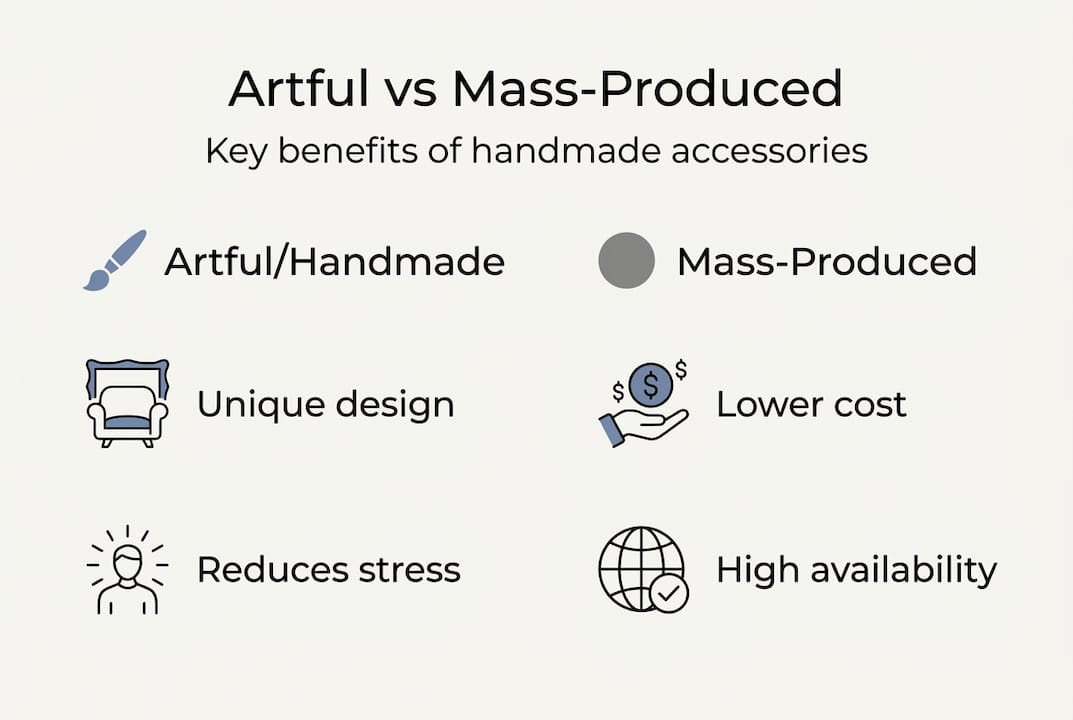
| Benefit | Artful/Handmade | Mass-Produced |
|---|---|---|
| Stress reduction | Up to 20% lower cortisol | Minimal effect |
| Emotional warmth | High | Low |
| Perceived value | 17% higher | Standard |
| Uniqueness | Every piece differs | Identical copies |
| Longevity of appeal | Lasting | Trend-dependent |
Think about where you spend the most time in your home. Your reading corner, your kitchen counter, the entryway you walk past every morning. These are exactly the spots where a well-chosen artful piece does its best work.
Pro Tip: Place artful accessories in high-traffic or high-use areas of your home. The more often you see them, the more they contribute to your daily mood and sense of comfort.
If you’re working on creating a signature home style, incorporating a few meaningful handmade pieces is one of the most effective moves you can make, even if you’ve never worked with a designer.
Cost versus value: Artful accessories compared to mass-produced decor
Aside from how they feel, artful accessories also differ significantly in cost structure and value compared to common store-bought items.
Yes, artful pieces cost more upfront. That’s a real fact. But the reason is straightforward. Handmade labor runs 30-40 hours at skilled rates near $97 per hour, while mass-produced items involve just 2-3 hours at $15-25 per hour. The cost difference reflects real time and expertise, not arbitrary markup.
| Factor | Artful/Handmade | Mass-Produced |
|---|---|---|
| Upfront cost | Higher | Lower |
| Production time | 30-40 hours | 2-3 hours |
| Emotional value | High | Low |
| Value retention | Strong over time | Depreciates quickly |
| Resale desirability | Often collectible | Rarely resaleable |
| Style lifespan | Enduring | Trend-based |
Artful pieces also hold their appeal far longer. A beautiful handmade ceramic or a one-of-a-kind sculpture doesn’t become outdated just because a trend shifts. Mass-produced decor, on the other hand, often looks dated within a few years because it was designed around a moment, not a sensibility.
That said, there are situations where mass-produced items make sense. Here are a few honest examples:
- You’re furnishing a temporary space like a rental with a short lease.
- You need high-volume, matching accessories for a large commercial or event space.
- You’re on a tight timeline with no room to source unique pieces.
- You need functional basics where aesthetics are secondary.
- You’re testing out a new color or style direction before committing fully.
For the pieces you’ll actually live with daily, though, artful accessories pay off. They bring lasting satisfaction, and you can explore more about how to use them effectively through this guide to decorate with artful touches.
How to select the right artful home accessories
Knowing the value of these unique pieces, here’s how to ensure your selection truly transforms your space.
Start by asking about the maker. Where was this piece made? Who made it? How long did it take? These aren’t just nice-to-know questions. Design-conscious buyers value authenticity over trends, and knowing the story behind a piece deepens your connection to it.
Next, think about how the piece fits into your existing room. Consider color, texture, and scale. An artful piece doesn’t need to match everything, but it should feel intentional. A hand-blown glass vase in amber tones, for example, can warm up a neutral room without clashing.
Here’s a practical checklist to guide your shopping:
- Is it genuinely handmade? Look for signs of variation and craftsmanship, not perfect uniformity.
- Does the material feel authentic? Natural materials like clay, glass, wood, and stone age beautifully and add texture.
- Does it serve a purpose? The best artful accessories work both as decor and as functional objects.
- Does it reflect your style? Choose pieces that feel like you, not pieces that feel like a trend.
- Do you know the maker’s story? A piece with a story becomes a conversation starter and a personal touchstone.
Also think about purpose. Some artful accessories are purely visual, designed to anchor a room or draw the eye. Others are functional, like a handcrafted tray or a beautifully made candle holder, that you interact with daily. Both are valid. Mixing them creates a space that looks curated and lives well.
Pro Tip: Shop from small-batch makers or artisan marketplaces rather than big-box stores. The selection is more unique, and you’re far more likely to find a piece that no one else in your neighborhood has.
For more inspiration on building a cohesive look, revisit our tips on accent pieces for style and how a unique home decor guide can help you structure your choices with confidence.
Our perspective: Why artful accessories are a better investment
The mainstream decor market wants you to chase trends. New season, new look, refresh everything. It’s a model designed around speed and volume, not around what actually makes a home feel meaningful.
We think that’s the wrong approach. Not because trends are bad, but because they prioritize short-term appeal over lasting satisfaction. Every handmade piece carries something a factory item never will: the mark of a real person’s effort and creative voice. That’s not sentimental. It’s practical. Those pieces age better, hold your interest longer, and make your space feel genuinely yours.
Most people underestimate how much their environment shapes their daily mood. The objects you live with are quietly influencing how you feel every single day. Choosing pieces that have meaning, that you actually love, isn’t indulgent. It’s smart decorating.
You don’t need to be an interior designer to make these choices well. You just need to slow down and choose with intention. Start with your signature style and build from there.
Discover one-of-a-kind artful pieces for your home
If this article has you thinking more carefully about the accessories you bring into your space, that’s exactly the point. Thoughtful choices make a real difference, and you deserve pieces that feel as good as they look.
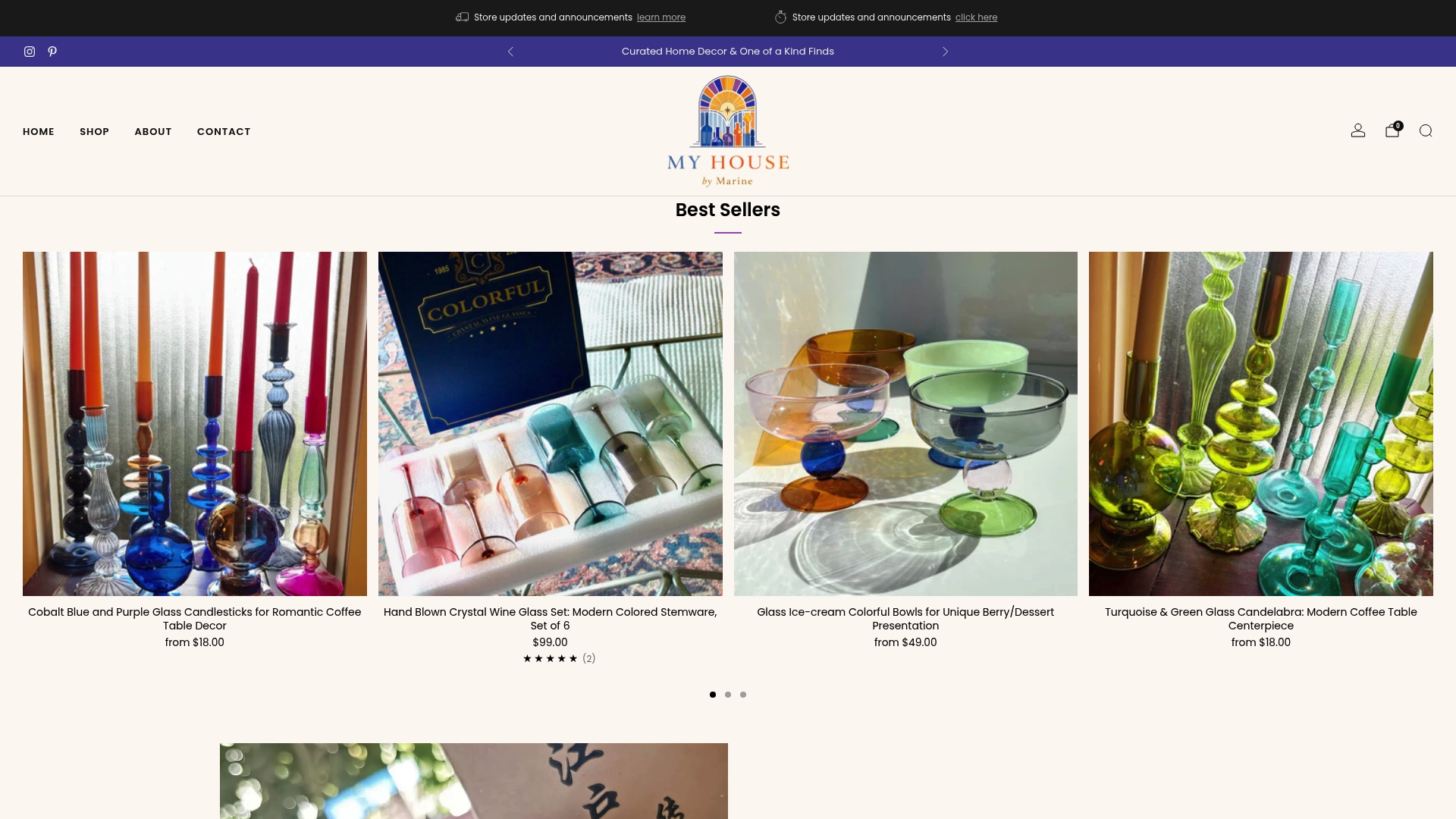
At My House by Marine, we specialize in exactly that. Our shop features a handpicked selection of unique home accessories, including one-of-a-kind handmade items and contemporary luxury glassware that you won’t find anywhere else. Looking for the perfect gift? Our artful gift sets are curated to impress and delight. Browse the collections and find the piece that speaks to your style.
Frequently asked questions
Why are artful home accessories more expensive?
Artful home accessories cost more because they require far greater skill and time. Handmade items take 30-40 hours to produce, compared to just 2-3 hours for mass-produced alternatives, and skilled artisans command higher hourly rates.
Do handmade accessories really reduce stress at home?
Yes. Research shows that meaningful art in your space can reduce cortisol levels by 15-20%, making artful pieces a genuinely healthy investment for your home environment.
What should I consider when choosing an artful accessory for my home?
Focus on authenticity, the maker’s story, and how the piece fits your personal style and daily function. Design-conscious buyers prioritize authenticity over passing trends, and that mindset leads to the best long-term choices.
Are these accessories good as gifts?
Absolutely. People are willing to pay 17% more for handmade gifts because they carry more emotional weight and perceived meaning than generic store-bought options.
Can artful accessories fit a modern decor style?
Yes, many handmade pieces are crafted with contemporary aesthetics in mind. A hand-blown glass sculpture or a minimalist ceramic bowl can serve as a focal point in even the most modern, streamlined interior.
Recommended
- Unique Home Decor Guide: Transform Your Space in 5 Steps – My House by Marine
- Vibrant Colorful Vases for Unique Home Decor & Housewarming Gifts – My House by Marine
- Transform your home with accent pieces for style – My House by Marine
- Handcrafted Modern Ceramic Serving Trays: Unique Decorative Dish in Ma – My House by Marine

