

Vintage decor has a reputation problem. Most people hear the word “vintage” and picture dusty thrift stores, mismatched furniture, or grandma’s attic. But that image couldn’t be further from the truth. The right vintage pieces don’t make a home look old. They make it look intentional, layered, and full of personality. If you’ve ever walked into a room and felt immediately at ease, noticing touches of warmth and character you couldn’t quite name, there’s a good chance vintage decor was doing the heavy lifting. This article will show you exactly what vintage decor is, how to use it, and why it’s one of the smartest ways to make your home feel like yours.
Table of Contents
- What defines vintage decor?
- Key elements and styles of vintage decor
- Personalizing your home with vintage decor
- Tips for sourcing and incorporating vintage finds
- The real value of vintage decor: What most guides overlook
- Explore unique vintage decor and gifts
- Frequently asked questions
Key Takeaways
| Point | Details |
|---|---|
| Definition clarified | Vintage decor refers to unique items from the 1920s-1980s that add personality to homes. |
| Style versatility | Vintage decor includes diverse styles like mid-century, farmhouse, and art deco. |
| Personalization | Hand-selected vintage pieces help showcase your individuality and tell a story. |
| Sourcing tips | Look for reputable shops and collections to find high-quality vintage items. |
| Meaningful value | Vintage decor builds lasting memories and connections in your living space. |
What defines vintage decor?
Let’s start by clearing up some confusion. People often use the words “vintage,” “antique,” and “retro” as if they mean the same thing. They don’t, and knowing the difference helps you shop smarter and talk about your style with confidence.
Vintage decor refers to items made roughly between the 1920s and the 1980s. These pieces carry the look and feel of a specific era without being so old that they qualify as true antiques. As vintage decor styling shows, vintage decor blends history and personal style for modern homes in a way that feels current rather than outdated.
Antiques, on the other hand, are items over 100 years old. They typically carry a higher price tag and a stricter definition used by collectors and auction houses. Retro style is a bit different again. It refers to newer items designed to look like they came from a past era. Retro is a stylistic imitation. Vintage is the real thing.
Here’s a quick comparison to keep things straight:
| Term | Time Frame | Key Feature |
|---|---|---|
| Vintage | 1920s to 1980s | Original items with era-specific character |
| Antique | 100+ years old | Rare, collectible, high historical value |
| Retro | Modern era | New items styled to look old |
When you’re hunting for genuine vintage pieces, here are the key things to look for:
- Maker’s marks or stamps on ceramics, glass, and metal pieces
- Natural materials like solid wood, hand-blown glass, or wrought iron
- Signs of handcrafting such as slight imperfections, hand-painted details, or uneven glazing
- Era-appropriate construction like dovetail joints in wooden furniture or lead-free soldered glass
- Patina which is the natural aging and sheen that builds up on metals and wood over time
These details tell a story. And that story is exactly what makes vintage decor so appealing. It adds warmth and uniqueness to a room in a way that mass-produced modern items simply cannot replicate.
Key elements and styles of vintage decor
Once you know what vintage decor is, the next step is understanding its range. Vintage is not a single look. It covers several distinct styles, each with its own color palettes, materials, and moods. Knowing which style speaks to you makes it much easier to build a cohesive home.
Popular vintage styles include mid-century modern, farmhouse, and art deco, and each one has a completely different feel.
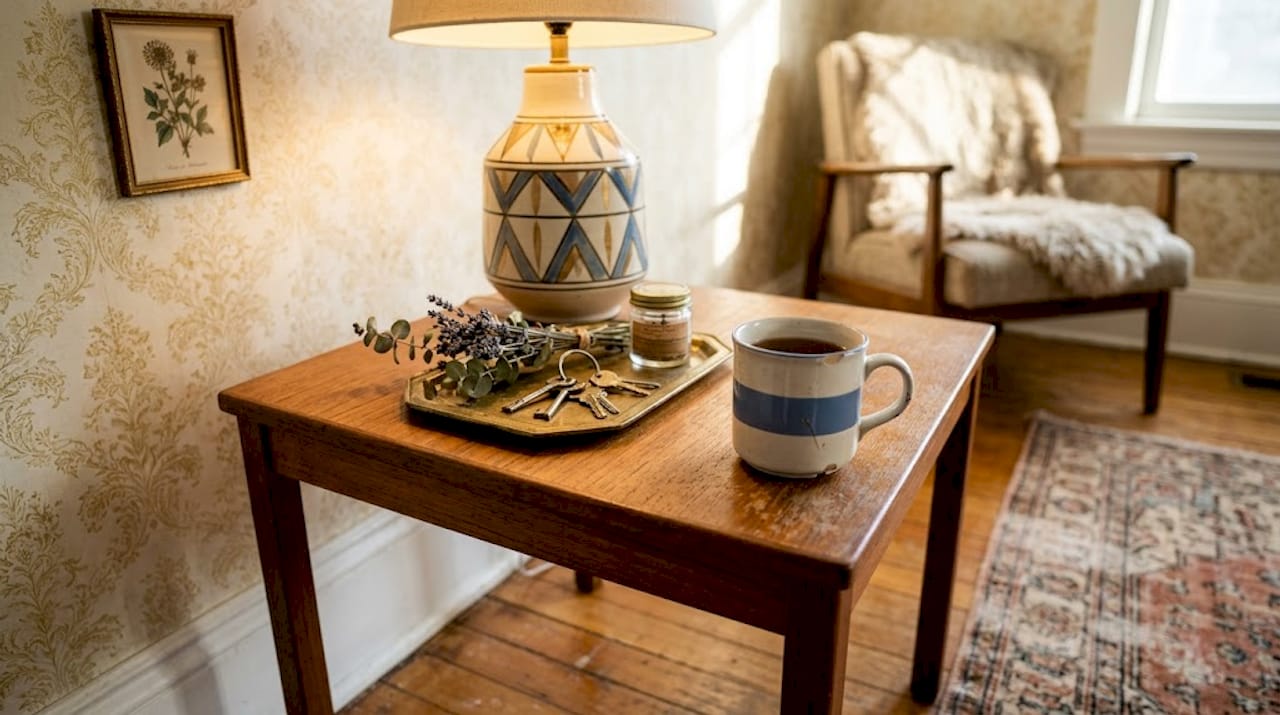
Here’s a breakdown:
| Style | Era | Key Features |
|---|---|---|
| Mid-century modern | 1940s to 1960s | Clean lines, organic shapes, warm wood tones |
| Art deco | 1920s to 1930s | Geometric patterns, bold colors, metallic accents |
| Farmhouse vintage | 1930s to 1960s | Rustic textures, neutral palettes, practical shapes |
| Hollywood regency | 1930s to 1950s | Glamour, mirrored surfaces, jewel tones |
| Bohemian vintage | 1960s to 1970s | Eclectic layering, rich textures, global influences |
The materials you’ll encounter across most vintage styles follow a familiar pattern:
- Wood: Walnut, teak, and oak are common in mid-century pieces. Distressed pine shows up in farmhouse style.
- Glass: Hand-blown glass, pressed glass, and Depression glass (named after the economic era, often in soft green, pink, or amber tones) are highly collectible.
- Ceramics: Stoneware crocks, art pottery, and hand-painted tiles all carry incredible texture and detail.
- Metals: Brass, copper, and wrought iron add warmth and weight to a room.
When it comes to color and pattern, vintage decor often leans into motifs like florals, geometric shapes, and nature-inspired prints. These patterns add visual interest without being overwhelming, especially when balanced against neutral backgrounds.
Pro Tip: If you’re just getting started with vintage decor, begin with smaller decorative pieces rather than furniture. A curated vintage piece like a ceramic vase, a decorative box, or a framed print lets you test a style before committing to larger investments. This approach gives you confidence to build over time.
Personalizing your home with vintage decor
Here’s where it gets exciting. Vintage decor isn’t just about finding old things. It’s about curating items that reflect who you are and what you value. Selecting unique vintage decor pieces makes your space truly yours, and that’s a goal no amount of matching store-bought furniture sets can achieve.
Think of it like building a playlist. A room filled only with identical modern furniture feels like shuffling the same five songs on repeat. But when you add a vintage ceramic lamp, a hand-painted tray, or an art deco mirror, the room gains rhythm and personality. Each piece has its own note.
Here’s a practical process for personalizing with vintage decor:
- Start with what you love. Think about eras, materials, or colors you’re naturally drawn to. Do you love the clean geometry of the 1950s? The earthy warmth of the 1970s? Let your instincts guide your first few choices.
- Identify anchor pieces. Choose one or two larger vintage items to serve as focal points. A statement lamp, a vintage mirror, or a decorative shelf can anchor a room’s personality.
- Layer in smaller accents. Once your anchor pieces are in place, add smaller finds around them. Decorative boxes, vintage glassware, or framed prints add depth without crowding the space.
- Mix vintage with modern intentionally. The goal isn’t a museum recreation of a past decade. It’s a living space that feels both grounded and fresh. Pair your vintage pieces with clean, neutral modern furniture so each stands out clearly.
- Tell a personal story. Use vintage decor to mark moments that matter to you. A piece from a travel destination, a style that connects to your heritage, or an item that reminds you of someone you love adds meaning that no interior designer can manufacture for you.
Blending vintage decor with modern elements is genuinely one of the most rewarding decorating skills you can develop. The contrast makes both styles look better.
Pro Tip: Use vintage decor to highlight personal milestones. A handmade ceramic piece from a local artisan market you visited, or an art glass object you found during a memorable trip, does double duty. It decorates your home and keeps a memory alive in everyday life.
Tips for sourcing and incorporating vintage finds
Knowing what you want is one thing. Knowing where and how to find it is another. Sourcing great vintage pieces takes a little patience, but the reward is finding something genuinely one of a kind.
Here are the best places to look:
- Local antique markets and flea markets: These are goldmines for affordable finds. You can examine pieces in person, which helps you verify quality and authenticity.
- Estate sales: Items here often come directly from a home’s original collection, meaning they’ve been cared for and are more likely to be genuine.
- Specialty vintage shops: Both brick-and-mortar and online vintage shops often curate their inventory carefully, which saves you the time of sorting through lower-quality items.
- Curated online collections: Well-chosen online shops offer vetted vintage pieces with clear descriptions, making it easy to find something specific without leaving home.
When you’re evaluating a piece for authenticity and quality, ask these questions:
- Does it have a maker’s mark, label, or signature?
- Are the materials consistent with the claimed era?
- Is any damage cosmetic (surface scratches, light fading) or structural (cracks, broken joints)?
- Does the seller provide provenance, meaning the item’s history or origin?
“Thoughtful curation of vintage decor elevates the impact of each piece in your home. It’s not about filling space. It’s about choosing what earns its place.”
Once you have your pieces, the integration stage matters just as much as the sourcing. Here are a few practical principles for blending vintage finds into a modern home:
Apply modern decor principles to anchor your vintage choices. Keep your walls and larger furniture fairly neutral so that vintage accent pieces pop without creating visual chaos. Repetition of one material, like brass or ceramic, across several pieces ties a room together without making it feel like a themed display.
Avoid the common pitfall of over-styling. A room stuffed with vintage finds stops feeling curated and starts feeling cluttered. Choose fewer, better pieces rather than filling every surface.
Pro Tip: Group vintage items in odd numbers. A trio of vintage glass bottles or five ceramic pieces arranged together creates a more natural, intentional display than even-numbered groupings. It’s a small detail that makes a real visual difference.
The real value of vintage decor: What most guides overlook
Here’s an opinion you won’t find in most decorating articles: the best reason to use vintage decor has almost nothing to do with aesthetics.
Every guide will tell you vintage pieces add character, warmth, and visual interest. That’s all true. But the real power of a well-chosen vintage item is the way it holds meaning over time. A mass-produced decorative object from a big box store will look the same in ten years as it does today. A vintage piece, by contrast, carries a history you can feel but can’t fully explain. It belonged somewhere before it belonged with you. That continuity matters.
We’ve seen this firsthand in the way people respond to curated collectible home styling. Guests don’t ask where the sofa came from. They pick up the hand-painted cloisonné box and ask about it. They pause at the art glass vase and wonder aloud about its origin. Vintage pieces start conversations that modern items rarely do.
There’s also a contrarian truth worth saying out loud: less really is more with vintage decor. The temptation, especially when you start discovering great finds, is to keep adding. But a room with one or two exceptional vintage pieces has far more impact than a room overloaded with them. Restraint is actually a skill, and it’s one that separates a beautifully styled space from a crowded one.
The mistake most people make is shopping for vintage decor the same way they shop for anything else, quickly and based on price. A truly meaningful vintage piece is one you chose deliberately because it reflects your taste, your history, or your sense of beauty. That kind of intention shows in a room, and it’s what transforms a house into a home.
Explore unique vintage decor and gifts
If this article has you ready to start building your own collection of vintage finds, you’re in the right place.
At My House by Marine, we specialize in carefully selected vintage and one-of-a-kind pieces that bring real character to your home. Whether you’re decorating your own space or looking for a gift that stands out, our collections are curated with intention. Browse our full range of shop curated vintage pieces to discover handmade treasures that fit your personal style. For something truly special, the floral cloisonné box is a stunning collectible that makes an unforgettable impression. Or explore our unique gift sets for thoughtfully assembled options that feel personal and meaningful. Every piece in our shop has something to say.
Frequently asked questions
What makes an item ‘vintage’ rather than ‘antique’?
A vintage item is usually from the 1920s to the 1980s, while antiques are over 100 years old and typically carry a higher collectible value.
How do I blend vintage decor with modern elements?
Pair vintage accents with neutral modern furniture, and choose a few standout vintage pieces rather than filling every corner for the most balanced look.
Where can I find authentic vintage decor?
Look for reputable vintage shops, local estate sales, and carefully curated online collections that vet their inventory for quality and authenticity.
Why choose vintage decor for gifts?
Vintage gifts are one of a kind, each carrying its own story and charm, which makes them far more memorable than standard store-bought options. Our vintage gift sets are a great starting point.
Is vintage decor expensive?
Prices vary widely. Smaller vintage accents and locally sourced items can be very affordable, and starting with a few well-chosen pieces is always smarter than buying a lot at once.
Recommended
- Vintage decor styling: step-by-step guide for a collectible home – My House by Marine
- Step-by-step vintage home decor guide for unique spaces – My House by Marine
- Top ways to personalize home decor for a unique touch – My House by Marine
- Unique Home Decor Guide: Transform Your Space in 5 Steps – My House by Marine

