

You might assume a pricey practical gift always wins. But research keeps proving the opposite. When someone gives you a decorative item you actually display in your home, the emotional payoff runs deeper and lasts far longer than most people expect. It becomes part of your daily environment, your story, and your sense of self. This article unpacks the psychology behind that effect, explains why handmade gifts carry even more weight, and gives you practical tools to choose decor gifts that truly resonate with the people you love.
Table of Contents
- The psychology behind why we treasure decorative gifts
- Handmade gifts: The personal touch that outlasts price
- How displayed gifts shape home atmosphere and personal stories
- Understanding quality: The handmade effect, authenticity, and what to watch for
- Why visible handmade gifts create lasting value — what most people overlook
- Find your next meaningful decorative gift
- Frequently asked questions
Key Takeaways
| Point | Details |
|---|---|
| Visibility equals value | Decorative gifts are cherished more because they’re seen daily and become part of our identity. |
| Handmade means heartfelt | Gifts crafted by hand show care and effort, leaving a stronger emotional mark than generic gifts. |
| Quality matters in handmade | Look for craftsmanship and authentic details to ensure your decorative gift truly stands out. |
| Displayed gifts tell stories | Visible decor becomes a daily reminder of shared experiences and deepens memories at home. |
The psychology behind why we treasure decorative gifts
Here is something most people never stop to think about: a gift you can see every day is a gift that keeps giving emotionally. That is not just intuition. Psychology backs it up in a fascinating way.
One key concept is the mere exposure effect. Simply put, the more often you see something, the more positively you feel about it. When a decorative gift sits on your shelf or hangs on your wall, you interact with it visually every single day. Those micro-moments of exposure quietly build warmth and affection. A purely practical gift, like a kitchen gadget tucked in a drawer, just does not get the same opportunity.
The second concept is the extended self. Psychologist Russell Belk first described this idea: the things we display in our homes become extensions of who we are. When someone gives you a beautiful art piece or a handmade ceramic bowl and you choose to display it, you are folding that object into your personal identity. Decorative gifts are valued for their visibility, extending their emotional impact through the mere exposure effect and through integration into personal identity. That is a genuinely powerful dynamic.
Here is a quick summary of the key psychological mechanisms at work:
- Mere exposure effect: Daily visibility builds positive feelings naturally over time
- Extended self: Displayed items become part of your identity and personal story
- Emotional anchoring: Objects linked to people and memories carry lasting emotional weight
- Conversation triggers: Visible decor invites stories, strengthening social bonds
“When you give someone a decorative gift they choose to display, you are not just giving an object. You are giving them a daily emotional experience tied to your relationship.” This is what makes the emotional value of creative gifts so much harder to replicate with a practical item.
The data points are compelling too. Consider how these mechanisms compare when applied to different gift types:
| Psychological mechanism | Decorative gift | Practical gift |
|---|---|---|
| Mere exposure frequency | High (daily visibility) | Low (often stored away) |
| Extended self integration | Strong | Weak |
| Emotional recall over time | Long-lasting | Fades quickly |
| Conversation and storytelling | Frequent | Rare |
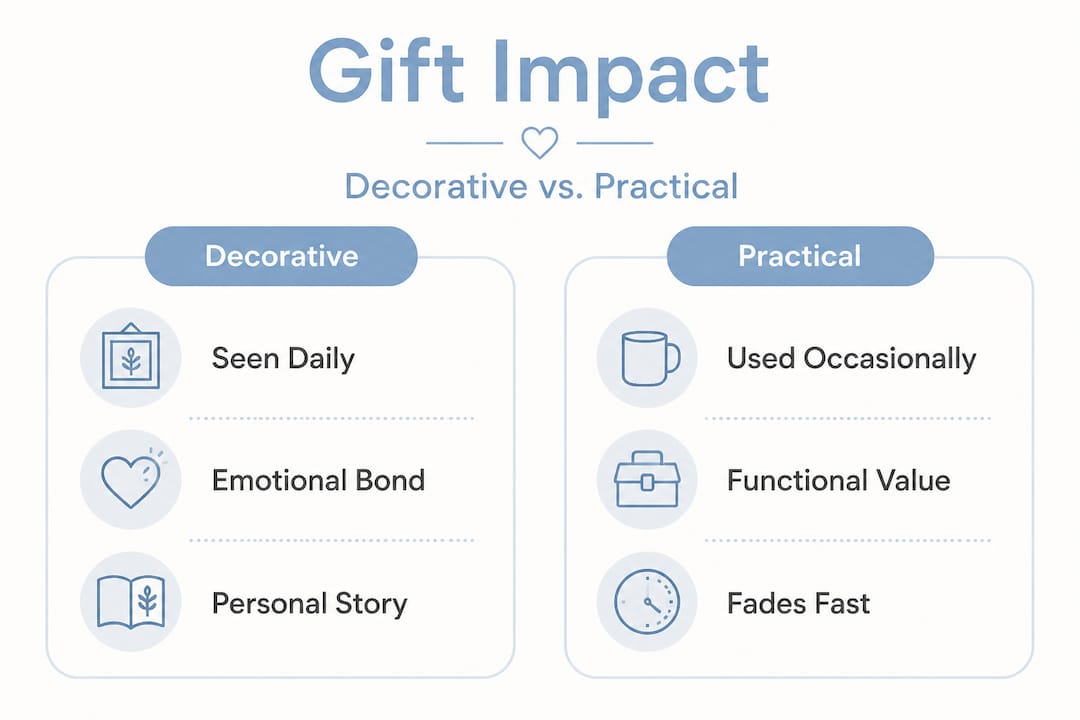
If you have ever loved a piece of gift ideas for art lovers, you have likely felt this without having a word for it. Now you do.
Handmade gifts: The personal touch that outlasts price
Price tags are a shortcut. We reach for expensive gifts when we are unsure what else to do. But science consistently shows that the emotional impact of a gift has almost nothing to do with what it costs. What really matters is perceived effort and personal thought.
Handmade gifts carry a built-in signal: someone spent real time and skill creating this specifically for the experience of giving. That message lands differently in the brain. Handmade gifts signal higher effort and thoughtfulness, outperforming expensive generic gifts in emotional impact. A Journal of Experimental Psychology study found that personalized gifts trigger 40% higher oxytocin (the bonding hormone) compared to generic purchases. And a longitudinal study found recipients recall handmade gifts 3.2 times more often than store-bought equivalents.
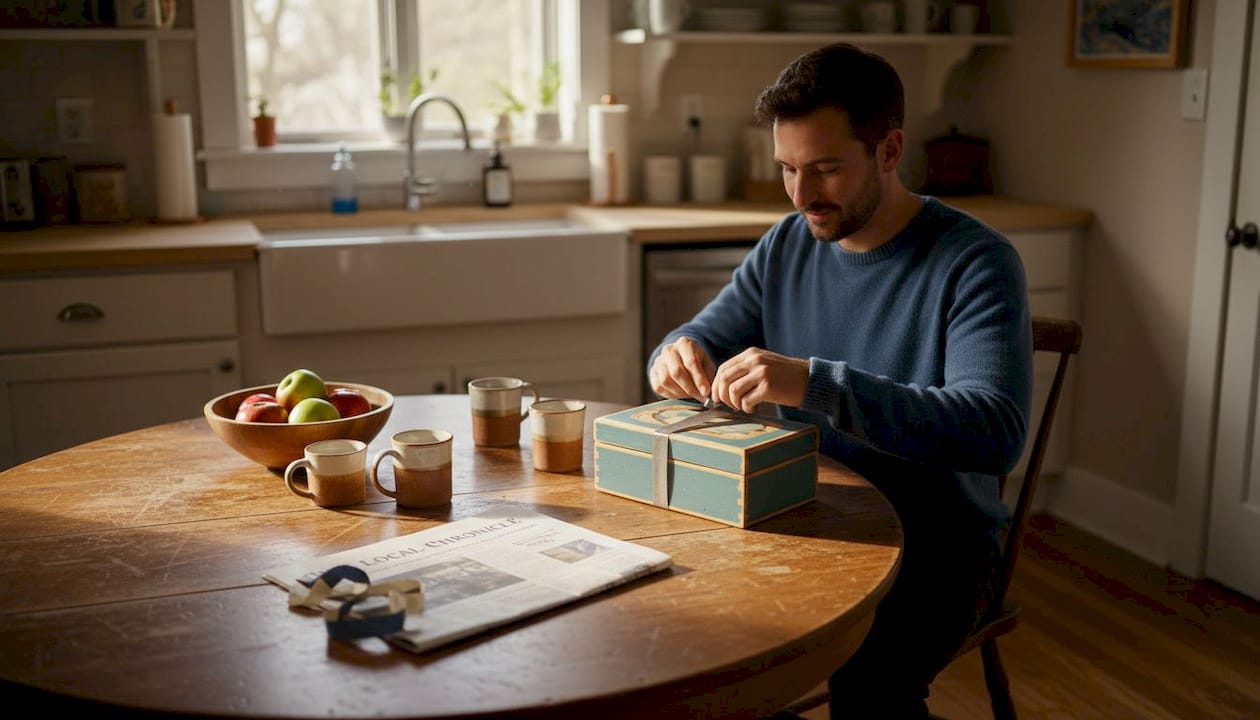
Think about that for a moment. Three times more likely to be remembered. That is the difference between a gift that fades and one that genuinely matters years later.
Here is how the two approaches compare side by side:
| Gift type | Emotional impact | Recall after 1 year | Perceived effort |
|---|---|---|---|
| Expensive generic item | Moderate | Low to moderate | Low |
| Handmade artisan piece | High | High (3.2x) | High |
| Personalized handmade item | Very high | Very high | Very high |
So, how do you actually choose a handmade decorative gift that works? Follow these steps:
- Start with their home, not your taste. Notice the colors, textures, and styles already present in their space. A gift that fits naturally feels intentional and thoughtful.
- Look for one-of-a-kind pieces. Mass-produced items carry zero uniqueness signal. A piece with slight variations, artist marks, or a specific story attached tells the recipient this was made by human hands.
- Match the object to a shared memory or interest. A hand-painted box for someone who loves jewelry, or a stained glass piece for someone who loves light-filled interiors, shows you truly see them.
- Consider shopping for unique decor from artisan-focused sources where items are genuinely made by hand, not just labeled that way.
- Read the story behind the piece. Good artisan decor usually comes with context: who made it, how, and from what materials. That story adds to the emotional weight of the gift.
Pro Tip: If you are torn between a higher-quality piece with less personalization and a more personalized piece with simpler craftsmanship, lean toward quality. A well-made object that lasts communicates care far longer than a personalized item that falls apart. You can find detailed guidance in this guide to choosing handmade decor if you want a deeper framework.
How displayed gifts shape home atmosphere and personal stories
Walk into any home that feels truly lived-in and personal, and you will notice something right away. The surfaces tell stories. A hand-painted ceramic piece on the mantle, a stained glass ornament catching afternoon light, a small artisan box on a bedside table. These are not just decorative elements. They are chapters of a life.
Decorative gifts integrate into personal identity through the extended self concept, meaning they become anchors for memory and meaning over time. This is why people reach for decorative gifts at meaningful life moments: housewarmings, milestone birthdays, anniversaries. The gift is meant to live in the home and grow in meaning as time passes.
When you personalize home decor with gifts that reflect the recipient’s taste, the effect is even stronger. Here is what displayed decorative gifts actually do for the people who receive them:
- They spark conversations. Guests notice a unique piece and ask about it, giving the recipient a moment to share a story about the giver.
- They create emotional continuity. Every time the recipient walks past the piece, they experience a small positive emotional reminder of the relationship.
- They reinforce personal identity. Choosing to display a gift says, “This reflects who I am.” It deepens the bond between the giver, the receiver, and the object.
- They shift the atmosphere of a room. A single artisan piece can change the feel of a space from generic to personal and warm.
- They outlast the occasion. Unlike flowers or food, a displayed decorative piece keeps doing its emotional work for years.
“Objects we choose to display become mirrors of our inner life, reflecting our values, our history, and the people who matter most to us.”
Exploring artisan gift sets is a great way to find pieces designed to work together in a home, creating a layered effect that feels curated rather than random. When a giver thinks at that level, it shows a depth of care that is almost impossible to fake.
Understanding quality: The handmade effect, authenticity, and what to watch for
Here is where things get nuanced. “Handmade” has become a powerful marketing word. And like any powerful word, it gets overused. Not everything labeled handmade was truly made with skill and care. This is important to understand before you spend your money or give your name to a gift.
The concept researchers call the “handmade effect” captures this tension perfectly. The handmade effect in marketing carries a double-edged quality: it can create powerful positive feelings through perceived love and uniqueness, but it also opens the door to quality variability that disappoints. A poorly executed piece described as handmade can actually damage the emotional impact of the gift.
So how do you tell the difference between genuinely well-crafted artisan work and something that just wears the label? Use this checklist before you buy:
- Look for natural variation. Authentic handmade pieces have slight imperfections, asymmetries, or variations in color that show human touch. Perfectly uniform items are almost always machine-made.
- Check for material quality. The weight, texture, and finish of a piece tell you a lot. A handmade ceramic should feel substantial. A hand-painted surface should show brushwork, not a digital print.
- Ask about the maker. Reputable artisan sellers can tell you who made the piece, where, and how. Anonymity is a red flag.
- Look at finishing details. How are the edges treated? Are the joints clean? Is the glaze even? Skilled artisans take care of these details because they know they matter.
- Read reviews with craftsmanship in mind. Look for reviews that mention durability and detail, not just aesthetics.
Pro Tip: Collections like stained glass artisan decor or hand painted boxes are excellent categories to explore because they require a high level of skill that is very difficult to fake. Stained glass in particular involves cutting, soldering, and assembly that genuinely cannot be mass-produced without it showing immediately.
When you invest in quality handmade decor, you are not just buying an object. You are buying the story of the hours spent making it, and that story transfers to the recipient along with the gift itself.
Why visible handmade gifts create lasting value — what most people overlook
We talk a lot about the “uniqueness” of handmade gifts, and that matters. But in our experience working with home decor and gifting, uniqueness alone is not what makes a decorative gift truly last in someone’s heart.
What really creates lasting value is the ongoing relationship between the person and the object. It is the fact that the gift becomes part of their daily life, a small fixture in their routine. They see it in the morning light. They notice it when they are having a hard day. They point it out to a friend who comes to visit. Each of those moments adds another layer of meaning to the original act of giving.
Most people pick gifts thinking about the moment of receiving. The unwrapping, the reaction, the excitement. But the real measure of a great decorative gift is what happens six months later, or three years later. Is it still out? Is it still being noticed? A well-chosen handmade piece almost always passes that test. A practical item or a generic expensive gift rarely does.
There is also something worth saying about the act of giving this kind of gift. When you take the time to find something unique, handmade, and personal, you are doing something brave and generous. You are saying, “I thought about you specifically.” That takes more courage than buying something expensive and obvious. It is a genuine act of care, and recipients feel that.
If you are looking for inspiration on what that can look like in practice, unique housewarming gifts offer a great example of how thoughtful decorative gifting works at a meaningful life moment.
Find your next meaningful decorative gift
You now have the science, the craft knowledge, and the practical tools to choose decorative gifts that genuinely matter.
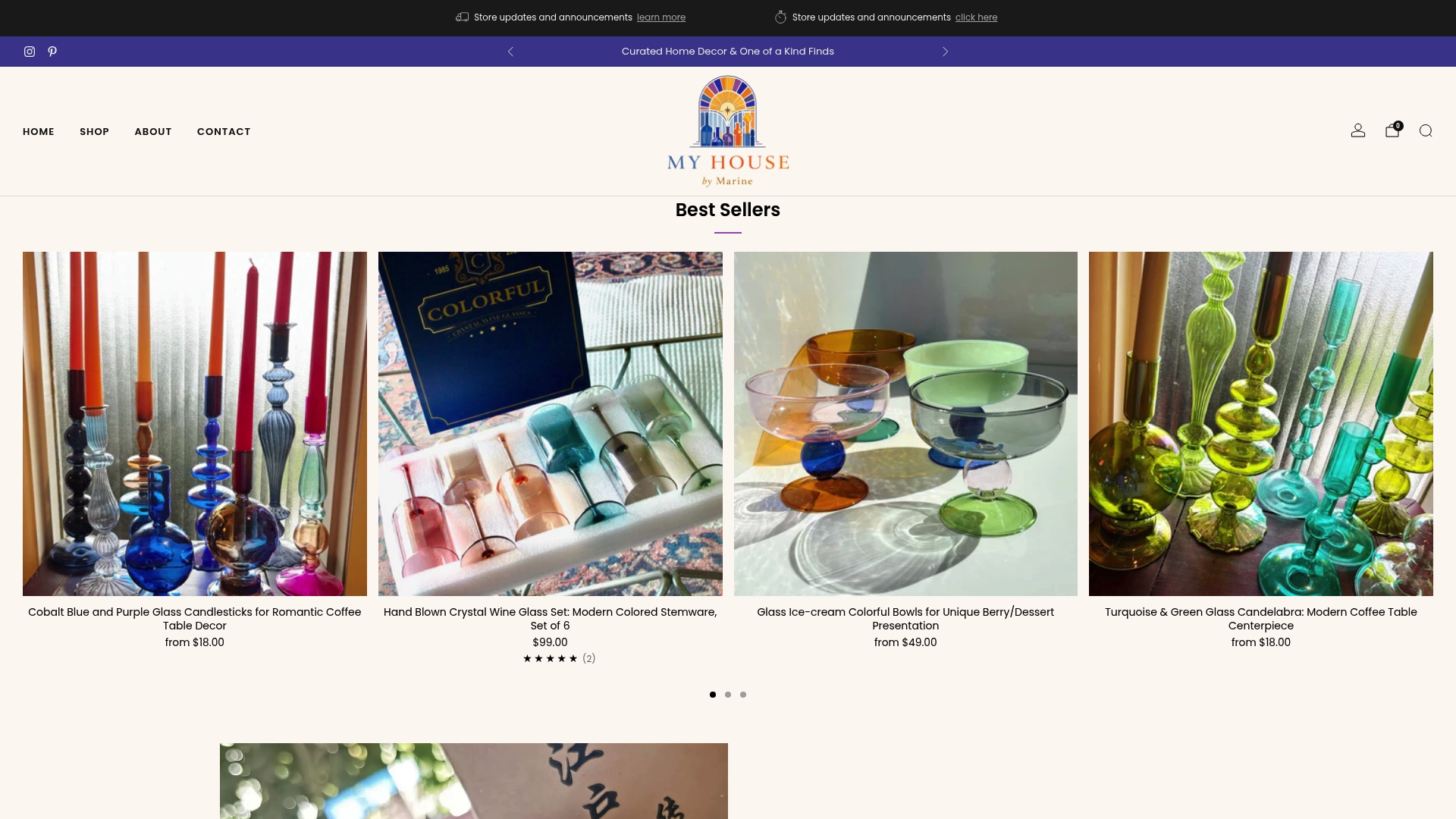
At My House by Marine, we curate one-of-a-kind unique home decor with real artisan stories behind every piece. Whether you are shopping for yourself or finding something special for someone else, our collections are built around the same principles this article covers: visibility, emotional resonance, authentic craftsmanship, and lasting beauty. From handmade stained glass to hand-painted ceramic boxes and contemporary luxury glassware, every piece is chosen to become part of someone’s daily life in a meaningful way. Explore our curated gift sets for a beautifully assembled starting point that takes the guesswork out of gifting.
Frequently asked questions
What makes decorative gifts more memorable than practical gifts?
Decorative gifts stay visible in the home, which means daily exposure reinforces emotional bonds through the mere exposure effect. Decorative gifts extend their emotional impact through visibility in a way that stored-away practical items simply cannot match.
Why are handmade gifts considered more thoughtful?
Handmade gifts signal real effort and personal attention, which triggers a stronger emotional response than store-bought options. Handmade outperforms expensive generic gifts in both oxytocin response and long-term recall.
How can I choose a high-quality handmade decorative gift?
Look for natural variation, strong material quality, and evidence of skilled finishing work in the piece you are considering. Because the handmade effect carries quality variability risks, buying from artisan-focused sources with transparent maker stories gives you the best protection.
Do decorative gifts work for all occasions?
Yes, decorative gifts can suit any occasion, but they land best when the piece reflects the recipient’s personal taste and fits naturally within their home style.
Is price or uniqueness more important in decorative gifts?
Uniqueness and personalization create far greater emotional impact than price alone. Thoughtful gifts outperform expensive generic ones in how strongly they are felt and how long they are remembered.
Recommended
- Why creativity makes home gifts matter: emotional value – My House by Marine
- Top Decor Gift Ideas for Art Lovers: Unique & Handmade – My House by Marine
- Discover the Unique Value of Artful Home Accessories – My House by Marine
- Home gift shopping: unique decor and luxury glassware – My House by Marine

