

Walk into most homes today and you’ll notice the same patterns: the same shelving, the same throw pillows, the same generic prints from the same big-box stores. It’s not a lack of taste — it’s a lack of options that feel truly personal. Handmade decor and luxury glassware change all of that. These are pieces with actual stories behind them, made by real hands, shaped with intention. Whether you’re refreshing your own space or searching for a gift that genuinely wows someone, this guide walks you through every step of choosing pieces that feel right, look stunning, and last for years.
Table of Contents
- Clarifying your purpose and vision
- Balancing materials, textures, and trends
- Selecting luxury glassware: handmade vs. machine-made
- Smart budgeting: investing in timeless anchors and accent pieces
- Why imperfections and authenticity matter more than trends
- Curated selections for unique decor and luxury glassware
- Frequently asked questions
Key Takeaways
| Point | Details |
|---|---|
| Clarify your vision | Define your purpose for choosing unique decor to match your space or gifting needs closely. |
| Balance materials | Employ the 60/30/10 rule and use odd-numbered groupings for harmonious displays. |
| Choose authentic glassware | Look for handmade qualities such as thin rims, lightness, and imperfections signifying artistry. |
| Invest in anchors | Dedicate most of your budget to timeless anchor pieces and a smaller portion to trendy accents. |
| Prioritize imperfections | Embrace authentic imperfections in handmade items for deeper emotional connections. |
Clarifying your purpose and vision
After you recognize the problem with repetitive, mass-produced decor, your next move is to get clear on why you’re shopping and what you actually want to achieve. This step sounds simple, but skipping it leads to impulse purchases that look out of place a month later.
Ask yourself whether you’re decorating for yourself, for your family’s daily life, or for someone else as a gift. Each scenario calls for a slightly different approach. Decorating for yourself gives you full creative freedom. Decorating a family space means you need pieces that are both beautiful and durable. Gifting is its own art form entirely — unique handmade decor or artisanal glassware adds personal story and elevates occasions without the pressure of matching another person’s existing color scheme.
Here are some vision prompts to work through before you browse or buy:
- Ambiance: Do you want the space to feel warm and cozy, sleek and modern, or eclectic and layered?
- Story: Is there a theme, travel memory, or aesthetic that you want to build around?
- Usability: Will the pieces be purely decorative, or do you need them to function — like a set of wine glasses you’ll actually use at dinner parties?
- Gifting: Are you choosing for a housewarming, a wedding, a birthday? What kind of impression do you want to leave?
Getting specific about these questions helps you filter out the noise when you’re looking at hundreds of options. It also helps you connect with the unique touch personalization that makes handmade pieces so powerful. A carved wooden bowl doesn’t just sit on a table — it becomes a conversation piece, a sensory experience, a reflection of who you are.
Pro Tip: Before buying anything, picture exactly how you’ll use or display it. If you can’t place it mentally in your space, keep looking. Emotional connection is just as important as visual fit. That’s what separates a room that feels like yours from one that simply looks assembled.
Think of it like cooking with a recipe. You don’t just throw random ingredients together — you start with a dish in mind. Your decor vision is your recipe. Once you have it, everything else becomes easier. For deeper inspiration on transforming your space with thoughtful choices, it helps to see real examples of how one or two carefully chosen pieces can shift the entire mood of a room.
Balancing materials, textures, and trends
With your vision in mind, move to the practical side: selecting materials and arranging decor for balance and visual interest. This is where design knowledge really pays off.
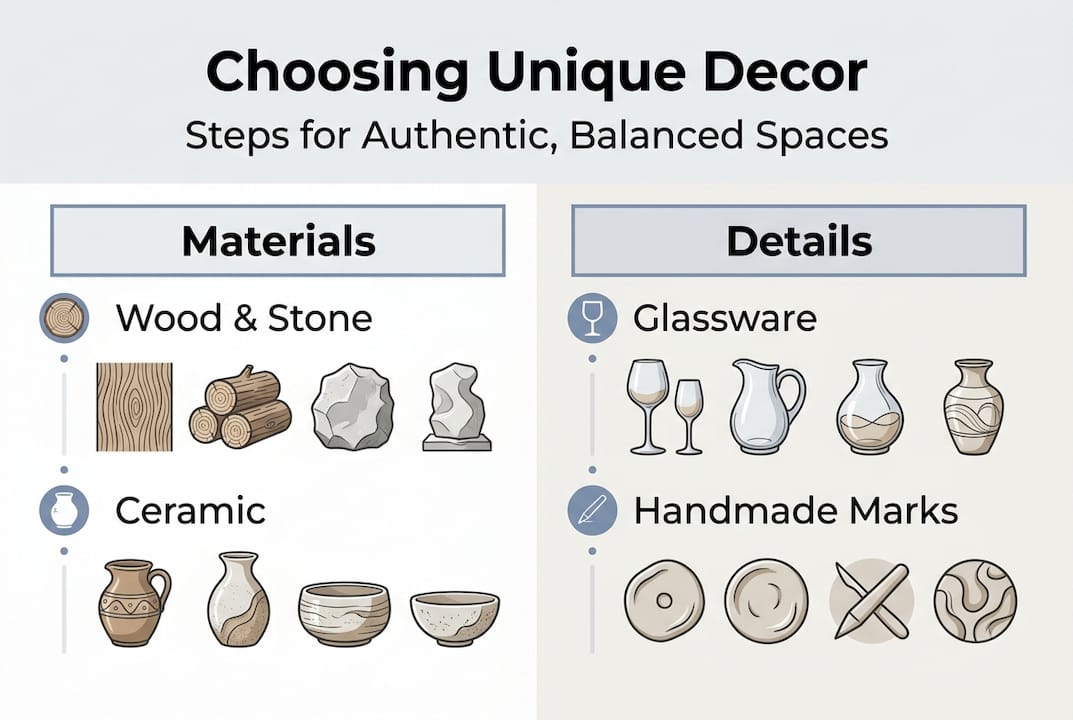
The most reliable framework designers use is the 60/30/10 material ratio. Think of it like the rule of thirds for decor. Your dominant material (60%) sets the tone — usually wood, stone, or natural fibers. Your secondary material (30%) adds contrast and texture — often ceramic or linen. The accent material (10%) provides the finishing spark — glass, metal, or an unexpected handmade piece.
| Approach | Material Split | Result |
|---|---|---|
| 60/30/10 rule (recommended) | 60% wood/stone, 30% ceramic, 10% glass/metal | Balanced, layered, intentional |
| All one material | 100% single material | Flat, monotonous, visually tiring |
| Random mixing | No clear ratio | Cluttered, unfocused, overwhelming |
| 50/50 split | Two equal materials | Competing focal points, no clear hierarchy |
The 60/30/10 material ratio is one of the best-tested principles for mixing handmade and contemporary pieces in a cohesive way. It prevents any single material from dominating the room while making sure every element has a clear role.
Here are the material grouping best practices to keep in mind:
- Always vary height, texture, and scale within a grouping
- Group in odd numbers — threes and fives feel more natural to the eye
- Avoid matching sets entirely — slight variation reads as curated, not random
- Combine matte and glossy finishes for contrast
- Let one piece in the group be the “hero” — bolder, taller, or more unique
Pro Tip: Use odd numbers (3s, 5s) when arranging vignettes on shelves, mantels, or tabletops. Three objects of different heights and textures will almost always look more intentional than four identical ones.
“Limit antiques to 1 or 2 per room when mixing with contemporary decor. More than that and the space starts to feel like a museum rather than a home.”
Trends are also worth addressing here. Right now, the folklectic home decor trend is gaining serious traction. Folklectic celebrates handmade imperfection, global craft traditions, and the beauty of pieces that look like they have a history. It’s a natural fit for anyone drawn to artisan work. Meanwhile, cottagecore, which was everywhere a few years ago, is quietly being retired as people move toward more eclectic, layered expressions of home style. The takeaway is to use trends as inspiration, not instruction. Trends can point you toward what’s resonating culturally, but your personal vision — the one you clarified in the previous step — always comes first.
For more on incorporating older finds into a modern setting, check out our guide to styling vintage accents so your mix feels intentional rather than accidental.
Selecting luxury glassware: handmade vs. machine-made
Once your material mix is in place, focus specifically on glassware. This is where craftsmanship and authenticity really set luxury pieces apart, and where knowing what to look for makes a big difference.
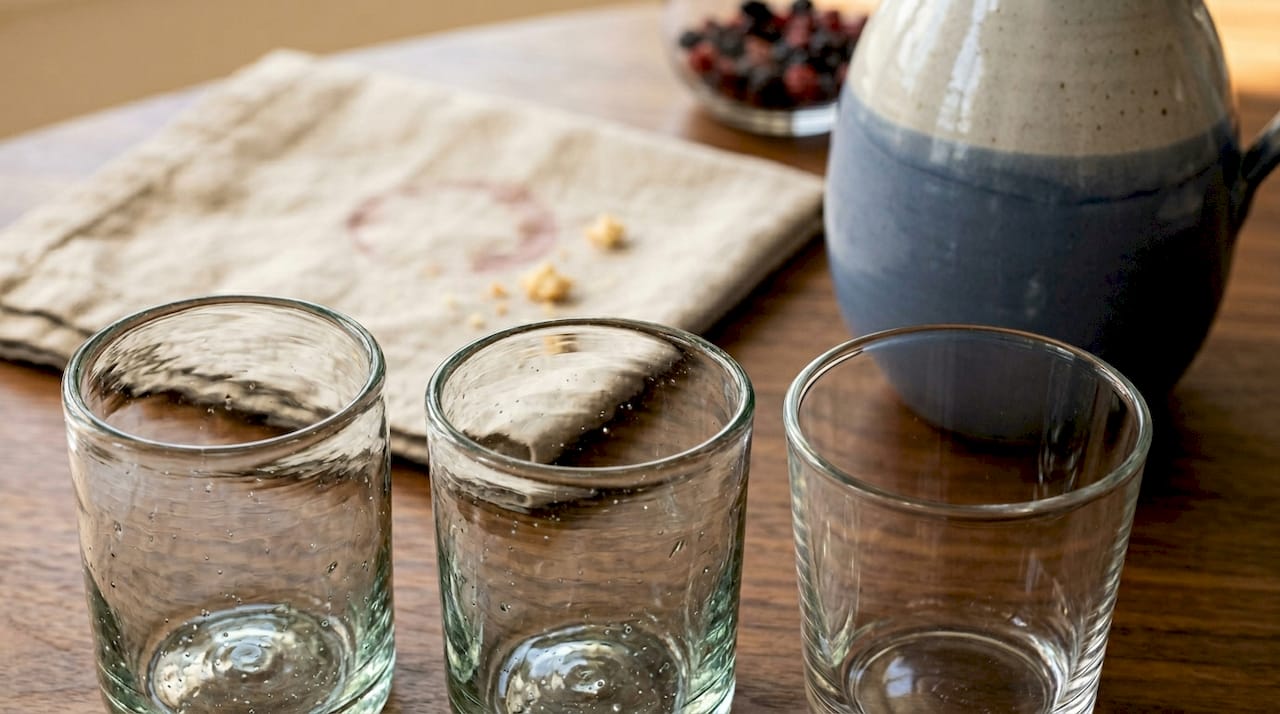
The core question is: handmade or machine-made? Both have legitimate uses, but they serve different purposes and create very different experiences.
| Feature | Handmade glassware | Machine-made glassware |
|---|---|---|
| Rim thickness | Thinner, more refined | Thicker, more uniform |
| Weight | Lighter, more delicate | Heavier, more consistent |
| Clarity | Superior, with subtle variations | Very uniform, no variation |
| Imperfections | Small bubbles or ripples (sign of authenticity) | None |
| Durability | Best for display and special use | Higher durability for everyday use |
| Emotional value | High — unique, story-driven | Lower — functional and replaceable |
| Price point | Higher | Lower to mid-range |
Hand-blown crystal offers thinner rims, a lighter feel, and superior clarity when compared to machine-made alternatives. This is why so many sommeliers and entertaining enthusiasts prefer it for special occasions. The shape matters too — Bordeaux glasses are broader to open up bold red wines, while tall flutes concentrate the bubbles and aroma of champagne.
To evaluate any piece of luxury glassware before buying, here’s a simple step-by-step approach:
- Check the rim. Run your finger around the edge. A handmade piece will feel thinner and slightly more varied. Machine-made glass has a uniform, often thicker rim.
- Hold it up to light. Look for subtle variations in thickness, slight ripples, or tiny air bubbles within the glass itself.
- Feel the weight. Quality hand-blown glass is surprisingly light for its size. Dense, heavy glass often signals machine production.
- Assess the clarity. Fine handmade glass has exceptional clarity — light passes through it beautifully, often with a faint prismatic effect.
- Check the base. Look at how the base is finished. Handmade pieces often show a small pontil mark (a tiny rough spot where the glassblower’s rod was attached), which is a mark of authenticity.
Pro Tip: Air bubbles or slight ripples in hand-blown glass are not flaws. They are the signatures of a skilled craftsperson and actually enhance the emotional connection you feel with the piece. Don’t pass over a glass because it’s not perfectly uniform — that variation is exactly what makes it special.
Luxury brands like Lalique, Christofle, and Saint-Louis have built their reputations on combining centuries-old glassblowing traditions with modern, clean design sensibilities. You don’t have to buy from major houses, though. Our hand-blown ombré glasses offer that same handcrafted quality with a contemporary, colorful personality that makes them just as suited for a dinner table as for a display shelf. For a full range of options, explore our artisan drinkware collection, which includes everything from whiskey tumblers to wine glasses with genuine handmade character.
Smart budgeting: investing in timeless anchors and accent pieces
With quality and authenticity prioritized, the next step is to establish your budget in a way that maximizes what matters most. Budget isn’t just about how much you spend — it’s about where you spend it.
The 80/20 rule of interior design says this clearly: allocate 80% of your decor budget to timeless anchor pieces and 20% to trendy accents. This approach protects your investment while still leaving room to have fun with seasonal or trend-driven finds.
Signs of a timeless anchor piece:
- Made from solid, durable materials (hardwood, stone, thick ceramic, crystal)
- Classic in shape with few trendy details that will date it quickly
- Heirloom quality — something you could pass down or give as a meaningful gift
- Versatile enough to move between rooms or styles over time
- Handmade or artisan-crafted, giving it genuine uniqueness and lasting value
Types of accent pieces to rotate and refresh:
- Small ceramic figurines or sculptural objects
- Seasonal textile accents like pillows or table runners
- Trend-driven glassware sets in seasonal colors
- Decorative candles or small botanical elements
Here’s a practical budgeting process to follow:
- List your anchor pieces first. Identify the 2 or 3 biggest, most permanent decor decisions in the space (a statement lamp, a key art piece, a signature glassware set).
- Set your total budget and calculate 80% of it — that’s your anchor fund.
- Research mid-range handmade options in the $50 to $200 range. This price band offers the best balance of craftsmanship and affordability for most shoppers.
- Reserve the remaining 20% for smaller accents you can swap out seasonally or as trends evolve.
- Avoid spreading budget evenly across every piece — this usually results in nothing standing out.
Mid-range handmade pieces in the $50 to $200 range offer the best quality-to-affordability balance for most home decorators and gift buyers.
If you’re shopping for someone else, the same logic applies. Spending more on one well-made, handcrafted piece says far more than a collection of cheaper items. Our housewarming gift tips cover this in detail, with specific ideas for sets that feel generous and personal without requiring a huge budget.
Why imperfections and authenticity matter more than trends
Here’s something that most decor guides won’t tell you outright: the most important quality in a piece of decor is not how stylish it is. It’s whether it makes you feel something.
Mass-produced decor is designed to appeal to as many people as possible. That means it’s intentionally neutral. It doesn’t surprise you, it doesn’t spark conversation, and a year after you buy it, you’ve stopped seeing it entirely. Handmade pieces work differently. They carry the energy of the person who made them. You can see the decisions, the pressure applied, the choices made in the moment of creation.
Authentic craftsmanship is visible in imperfections — the slight asymmetry of a hand-thrown bowl, the air bubble caught mid-swirl in a glass, the uneven glaze on a ceramic vase. These are not mistakes. They are proof that a real person made this thing, with real skill, in real time.
“Imperfections in hand-blown glass enhance emotional connection — they are not flaws but fingerprints of the maker.”
Those imperfections create conversation. When a guest picks up a glass and asks about it, you get to share a story. That’s something a shrink-wrapped box from a big-box store will never give you. It’s also why so many people find that one truly meaningful piece changes how they feel about an entire room, in a way that a whole cartload of inexpensive accessories never does.
We believe this deeply. Trends are interesting signals — they tell you what’s resonating in culture right now. But they are temporary by definition. Authenticity is not temporary. A beautifully made piece, chosen with intention, becomes part of your home’s identity in a way that no trend-driven purchase ever will. Explore our artful transformation guide to see how a small number of genuine, well-chosen pieces can reshape a space entirely.
Pro Tip: Choose pieces that spark a feeling or a story, not just those that match your current color palette. Palettes change. Good stories don’t.
Curated selections for unique decor and luxury glassware
Now that you’re equipped to select unique decor and luxury glassware with real confidence, it’s time to put that knowledge to work.
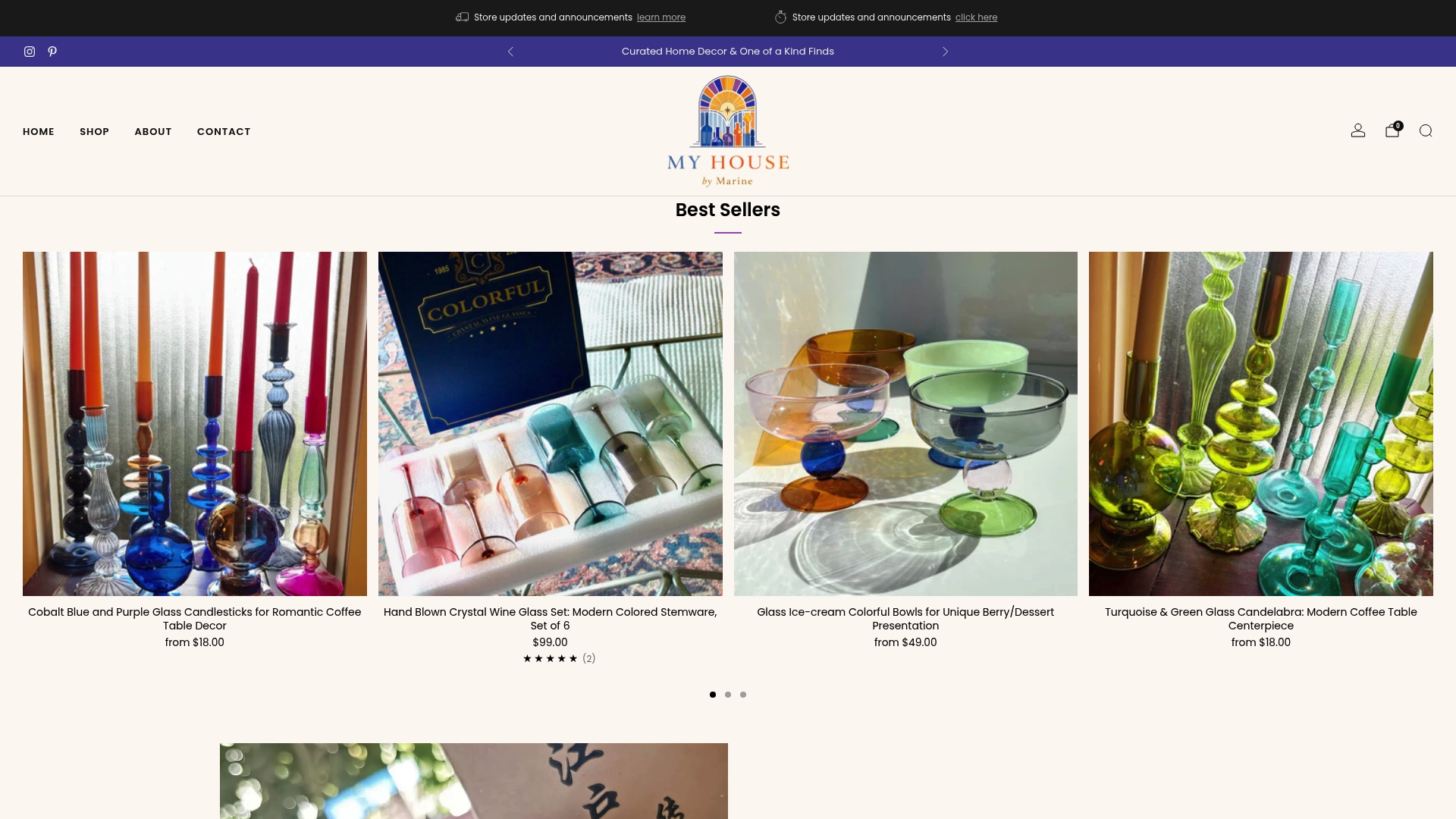
At My House by Marine, we curate one-of-a-kind handmade decor and contemporary luxury glassware that you genuinely won’t find in chain stores. Every piece in our collection is selected for its craftsmanship, character, and the kind of visual impact that transforms a room. Whether you’re shopping for your own space or looking for a gift that will truly stand out, our statement glassware and handmade decor collections give you real options that match the standards this guide lays out. From hand-blown tumblers to sculptural decor pieces, each item carries a story worth sharing. Browse our full shop at myhousebymarine.com and find the piece that speaks to you.
Frequently asked questions
How do I identify authentic handmade glassware?
Look for slight imperfections like air bubbles, ripples, and variations in thickness — these are the natural signatures of true handcraftsmanship, not defects.
What’s the best material mix for a balanced decor?
Follow the 60/30/10 material ratio: 60% wood or stone as your dominant material, 30% ceramic, and 10% glass or metal for a harmonious and layered look.
How should I budget for unique decor purchases?
The 80/20 rule works well here — put 80% toward timeless anchor pieces and 20% toward trendy accents, and aim for mid-range handmade ($50 to $200) for the best quality-to-value balance.
What decor trends are popular for handmade items right now?
The folklectic trend is leading right now, celebrating handmade imperfection and global craft traditions, while more overdone themes like cottagecore are fading out of the spotlight.
Can I mix vintage and modern decor in one space?
Absolutely — but keep it to 1 or 2 antiques per room so the space stays balanced, intentional, and grounded in the present rather than looking like a collection of the past.
Recommended
- Unique housewarming gifts: Handmade sets & glassware 2026 – My House by Marine
- Unique Home Decor Guide: Transform Your Space in 5 Steps – My House by Marine
- Statement glassware: elevate your home with unique pieces – My House by Marine
- Explore unique modern glassware: top artistic picks 2026 – My House by Marine

