

Most people treat decorative accessories like a bonus round: something to add after the “real” decorating is done. But that thinking misses something important. Accessories are not afterthoughts. They are the final layer that makes a room feel complete, personal, and emotionally meaningful, not just visually attractive. This article will walk you through how to choose, place, and edit accessories so your space feels genuinely yours, not like a showroom floor.
Table of Contents
- Why decorative accessories matter: Beyond aesthetics
- The mechanics of styling: Placement, movement, and scale
- Restraint, editing, and the pitfalls of over-accessorizing
- Cohesion versus contrast: Achieving harmony with accessories
- Function as art: When everyday items become decorative
- A new way to see accessories: Curate, don’t collect
- Find your signature accessories with My House by Marine
- Frequently asked questions
Key Takeaways
| Point | Details |
|---|---|
| Accessories complete a room | Thoughtful accessories add emotional meaning and make spaces feel finished. |
| Balance is essential | Editing and restraint prevent clutter and maintain harmony in decor. |
| Composition guides the eye | Strategic placement, groupings, and varied proportions create movement and focus. |
| Cohesion and contrast matter | Mixing color, texture, and material adds personality while keeping the design intentional. |
| Function meets design | Objects like lamps and books combine usefulness with style, elevating simple items into art. |
Why decorative accessories matter: Beyond aesthetics
There is a real difference between a room that looks finished and one that feels lived in. You probably know that feeling when you walk into a space and something just clicks. The art on the wall, the objects on the shelf, the small dish on the entryway table. Those details are doing the heavy lifting.
“Accessories create that ‘lived-in’ and meaningful feeling, not just visual appeal.” — Tidbits & Twine
Decorative accessories function as storytelling tools. The vintage ceramic bowl you brought back from a trip, the handmade vase your daughter made, the framed print from an artist you admire. Each object carries a memory or a point of view. Together, they communicate who you are.
Here is what accessories actually accomplish in a room:
- They personalize the space by reflecting your history, your travels, and your taste.
- They add emotional warmth that furniture alone cannot provide.
- They establish the mood, whether that is calm and minimal or rich and layered.
- They tie together colors, materials, and styles already present in the room.
When you look at artful home accessories through this lens, you start to see them as essential ingredients rather than optional extras. And once you understand that, your entire approach to decorating shifts. Think of it like cooking: the furniture is the main dish, but the accessories are the seasoning that makes everything taste like something.
The accent pieces you choose for style say a great deal about your personality. A room full of mass-produced matching sets communicates something very different from one filled with a mix of handmade, found, and collected objects. Neither is wrong, but the second one tells a richer story.
The mechanics of styling: Placement, movement, and scale
Knowing why accessories matter is one thing. Knowing how to place them is where most people get stuck. The good news is that there are a few repeatable principles you can apply to almost any surface.
Accessories influence eye movement, emphasis, balance, and the overall mood through composition choices. In other words, where you put something matters as much as what you put there.
Here are four core principles to keep in mind:
- Vary the height. Place tall objects next to short ones. A tall vase next to a low stack of books next to a small sculptural object creates visual rhythm and keeps the eye moving.
- Use odd-number groupings. The “rule of three” works because odd groups feel naturally balanced without being symmetrical. Three objects of different heights, textures, and materials almost always look good together.
- Respect negative space. Leave breathing room between groupings. The empty space is not wasted; it lets each object stand out on its own merit.
- Consider what guides the eye. Imagine someone looking at your shelf for the first time. Where does their eye land first? Where does it travel next? Good styling creates a path.
| Styling element | What it does | Practical example |
|---|---|---|
| Height variation | Creates visual rhythm | Tall candle, medium vase, small bowl |
| Odd groupings | Balances without symmetry | Three objects on a tray |
| Negative space | Gives pieces room to breathe | Empty shelf section between groupings |
| Texture contrast | Adds depth and interest | Matte ceramic next to polished glass |
| Scale matching | Keeps proportion right | Large art paired with large furniture |
Expert guidance recommends varying height and texture and editing carefully to achieve the kind of balance that looks effortless. The key word there is editing. You are not just adding things. You are also deciding what to take away.
Pro Tip: Before you commit to a final arrangement, photograph it on your phone. The camera flattens the space and makes it easier to spot imbalances or overcrowding that your eyes might miss in person.
When you are working on specific surfaces, the rules stay consistent. Whether you are styling a console, a coffee table, or a set of floating shelves, styling tables and shelves like a designer always comes back to those same principles: vary height, use odd numbers, edit aggressively. Getting decor pieces to work together is also about giving each piece enough space to contribute without competing.
Restraint, editing, and the pitfalls of over-accessorizing
Here is an uncomfortable truth: more accessories do not automatically mean a better-looking room. In fact, the opposite is often true. Over-accessorizing or ignoring scale can actually degrade a room’s design, and restraint and editing are strongly advised by most professional stylists.
Think about the rooms you have admired most in photos or in person. They probably felt curated, not cluttered. There was space between objects. Each piece had room to be noticed.
Clutter tends to creep up gradually. You add one thing, then another, and before long every surface is full. The room starts to feel chaotic rather than cozy. Here is how to recognize when you have crossed the line:
- Objects are competing for attention rather than complementing each other.
- You cannot see the furniture surfaces beneath the accessories.
- Nothing feels like a focal point because everything is shouting at equal volume.
- The room feels stressful to be in rather than relaxing.
| Edited space | Over-accessorized space |
|---|---|
| Each piece has breathing room | Surfaces are fully covered |
| Clear focal points | No single eye-catching element |
| Mix of heights and textures | Everything at the same level |
| Feels calm and intentional | Feels busy and stressful |
| Tells a clear story | Story gets lost in the noise |
Uniform products can look forced, and scale issues lead directly to clutter. One of the biggest mistakes people make is buying a full matching set of accessories in the same finish, size, and style. It ends up looking like a catalog display rather than a real home.
The fix is simpler than you think. Go through each surface and remove half of what is there. Live with it for a week. If you miss something, bring it back. If you do not notice its absence, it did not belong in the first place.
Pro Tip: Use a tray as a container for groupings. When objects sit together in a tray, they read as one curated unit rather than scattered pieces. It visually tidies a surface while adding a layer of intentional styling.
Consider styling for cohesion as an ongoing editing practice, not a one-time project. Your taste evolves. Objects wear out their welcome. Rotating pieces in and out keeps the space feeling fresh without adding more to it.
Cohesion versus contrast: Achieving harmony with accessories
Once you have edited down to the essentials, the next challenge is making sure the pieces you keep feel like they belong together. This is where color, texture, and material choices become your best tools.
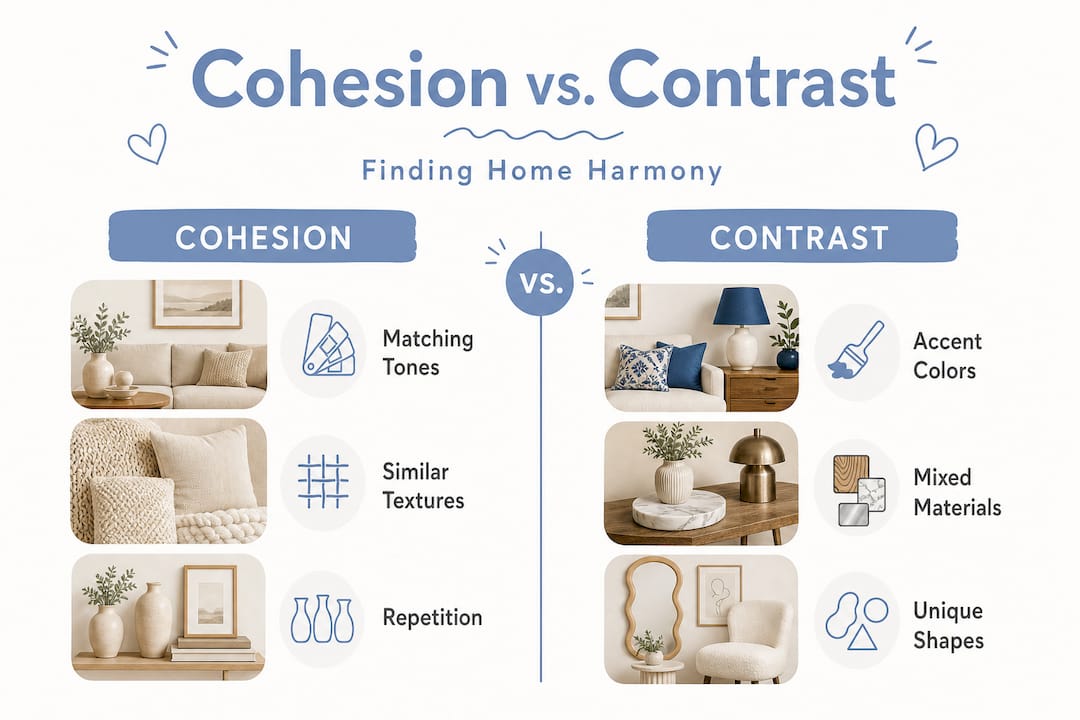
Accessories can reinforce cohesion or introduce contrast, and luxury guidance consistently recommends balance over clash. In other words, you do not want everything to match perfectly, but you also do not want everything to fight for dominance.
Here is a practical framework for getting the balance right:
- Establish a color story first. Identify two or three colors already in the room through paint, furniture, or textiles. Your accessories should either echo those tones or deliberately introduce one accent color.
- Mix materials with intention. Pair a matte ceramic with something reflective, like glass or metal. The contrast creates visual depth without visual chaos.
- Blend old with new. A vintage piece next to something contemporary creates that collected-over-time quality that makes a room feel authentic rather than staged.
- Let one piece be bold. Give yourself permission to have one statement object per grouping, something that grabs attention first. Then let the other pieces support it quietly.
A contemporary, harmonious space does not mean everything looks the same. It means everything feels like it belongs to the same story. When you are choosing unique handmade decor, you naturally get variety in texture, form, and color that mass-produced items rarely deliver. That inherent variety actually makes cohesion easier to achieve, because no two pieces are trying to be identical.
Pro Tip: If you are unsure whether two pieces work together, hold them next to each other in natural light. If one makes the other look better, keep them together. If they compete, separate them.
Function as art: When everyday items become decorative
One of the most satisfying things you can do in a room is find objects that earn their place twice over: once for their function, and once for their beauty. This approach is especially relevant if you live in a smaller space where everything needs to pull double duty.
“Functional items such as lamps and books can both serve a purpose and act as decorative accessories, adding comfort and character to any room.” — Good Housekeeping
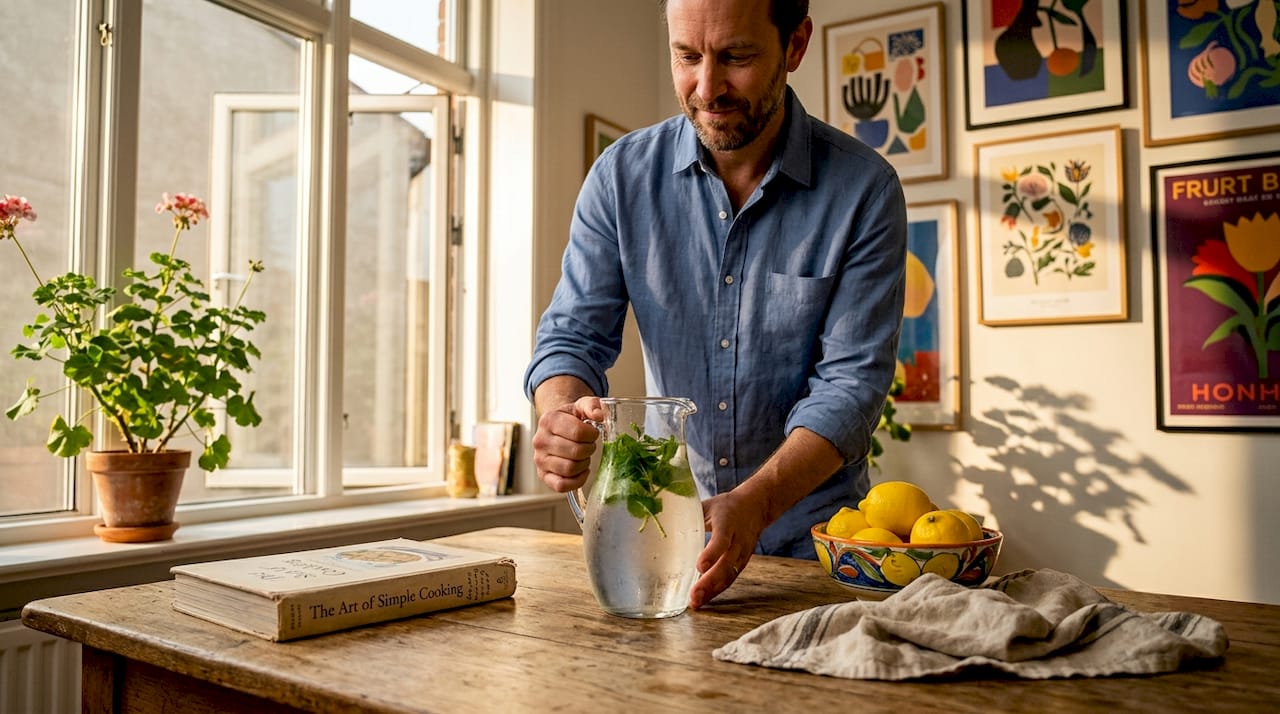
Lighting and books are both functional and decorative, and they are among the most powerful styling tools you have. A beautiful lamp does not just light the room. It adds height, material interest, and visual warmth. A stack of books with interesting spines or covers creates color and texture on a shelf or table.
Other everyday objects that double as decor:
- Trays: Contain and organize smaller objects while creating a polished, intentional vignette.
- Ceramic or glass vessels: Hold fruit, dried botanicals, or simply stand alone as sculptural objects.
- Candles: Add warmth and height, and when unlit they function as elegant sculptural pieces.
- Decorative dishes and trinket boxes: Keep jewelry, keys, or small items corralled while contributing visual interest to a surface.
For collectors and those who love meaningful objects, the functional-as-art approach is especially rewarding. When you find a handmade piece that is both useful and beautiful, it becomes part of your daily life in a way that purely decorative objects sometimes do not. It earns a permanent spot.
If you are looking for thoughtful gifts, consider items that straddle this line. A beautiful tray, an artisan glass bowl, or a collectible dish works as both a gift and a lasting piece of decor. You can find decor gift ideas for art lovers that hit that sweet spot between useful and beautiful.
A new way to see accessories: Curate, don’t collect
Here is a perspective worth sitting with: the best-accessorized rooms are not the ones with the most objects. They are the ones where every object has a reason to be there.
There is a real difference between collecting and curating. Collecting is accumulation. Curating is selection with intention. The word “curate” comes from the art world, where a curator selects which pieces to show and, just as importantly, which ones to leave out. That is exactly the mindset that transforms a cluttered shelf into a compelling one.
We see this pattern again and again. Someone walks into a beautifully styled room and says it feels personal, even when they have never met the owner. That feeling comes from the objects in it telling a coherent story. The room is not trying to impress anyone. It is simply expressing something true.
Negative space plays a huge role here. Leaving a surface partly empty is not laziness or an unfinished project. It is a design decision. It gives the objects you do display room to breathe and be noticed. It says: this piece matters enough to stand alone.
True personalization, the kind that makes your home genuinely feel like yours, comes through the stories your accessories tell. The emotional impact of decor is real and measurable in how a room makes you feel when you walk into it. When you choose with intention rather than impulse, that feeling becomes deliberate rather than accidental.
So the next time you are tempted to add one more thing to a shelf, ask yourself: does this tell my story, or is it just filling space? That single question is one of the most useful editing tools you have.
Find your signature accessories with My House by Marine
You have learned the principles. Now comes the enjoyable part: finding the right pieces to bring your space to life.
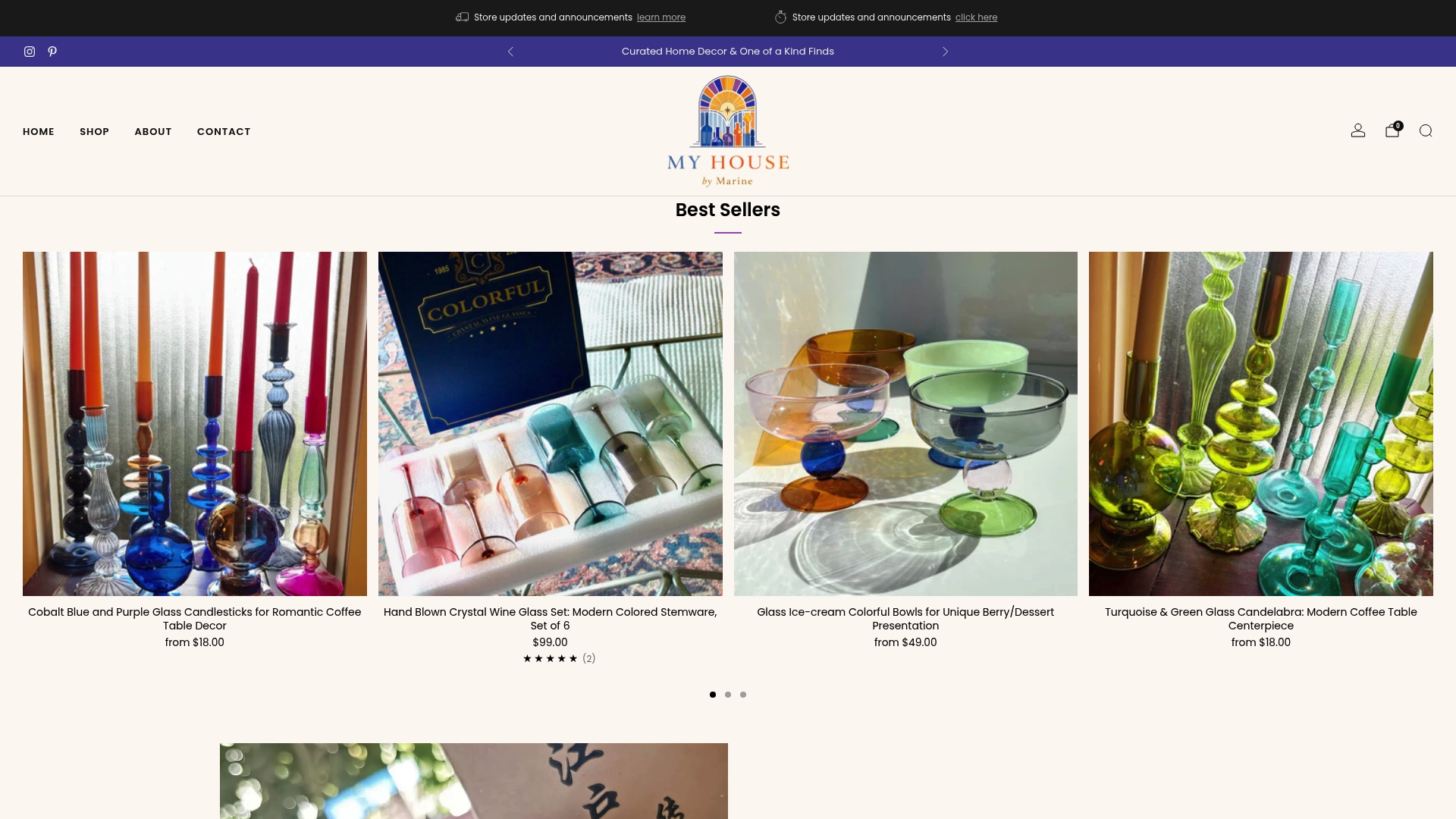
At My House by Marine, we specialize in one-of-a-kind handmade accessories, contemporary luxury glassware, and artisan-made objects that give your home that curated, collected-over-time quality. Every piece in our unique home decor collection is chosen because it stands on its own as something special. Whether you are looking for a statement piece for a shelf, a meaningful gift, or a finishing touch that ties a room together, our special gift sets offer options for every aesthetic. If you love objects with history and artistry, take a look at the vintage cloisonne trinket dish, a perfect example of functional beauty that earns a permanent spot in any home.
Frequently asked questions
How do I choose accessories that suit my style without clutter?
Choose accessories that carry personal meaning, vary their shape and height across groupings, and edit your selection regularly so every piece has enough breathing room to be noticed.
Can functional objects really serve as decoration?
Yes, and some of the best ones do. Lamps and books are classic examples of everyday objects that contribute both practical function and decorative character to a table or shelf.
What’s the “rule of three” in accessory styling?
It means grouping accessories in odd numbers, usually threes, to create natural visual balance and flow without the rigid symmetry that can feel stiff or staged.
How do I avoid making my room look trendy or forced with accessories?
Stick to varied scales and blend pieces from different eras or origins. Uniform finishes and mismatched scale are two of the most common reasons a styled room ends up looking forced rather than personal.

