

You don’t need a full renovation to make your home feel brand new. Most people assume that real transformation requires new furniture, fresh paint, or a big budget. But here’s the truth: the most powerful design upgrades often come from the smallest, most thoughtful additions. Creative home accessories, especially unique, handmade ones, can shift the entire energy of a room. This guide walks you through why they matter, how to use them effectively, how to avoid the most common decorating mistakes, and why they make some of the most memorable gifts you can give.
Table of Contents
- Why creative home accessories matter
- How creative accessories transform your space
- Curating your space: Tips for balance and impact
- Creative accessories as thoughtful gifts
- Our perspective: Quality over quantity is the secret
- Explore one-of-a-kind accessories for your home or next gift
- Frequently asked questions
Key Takeaways
| Point | Details |
|---|---|
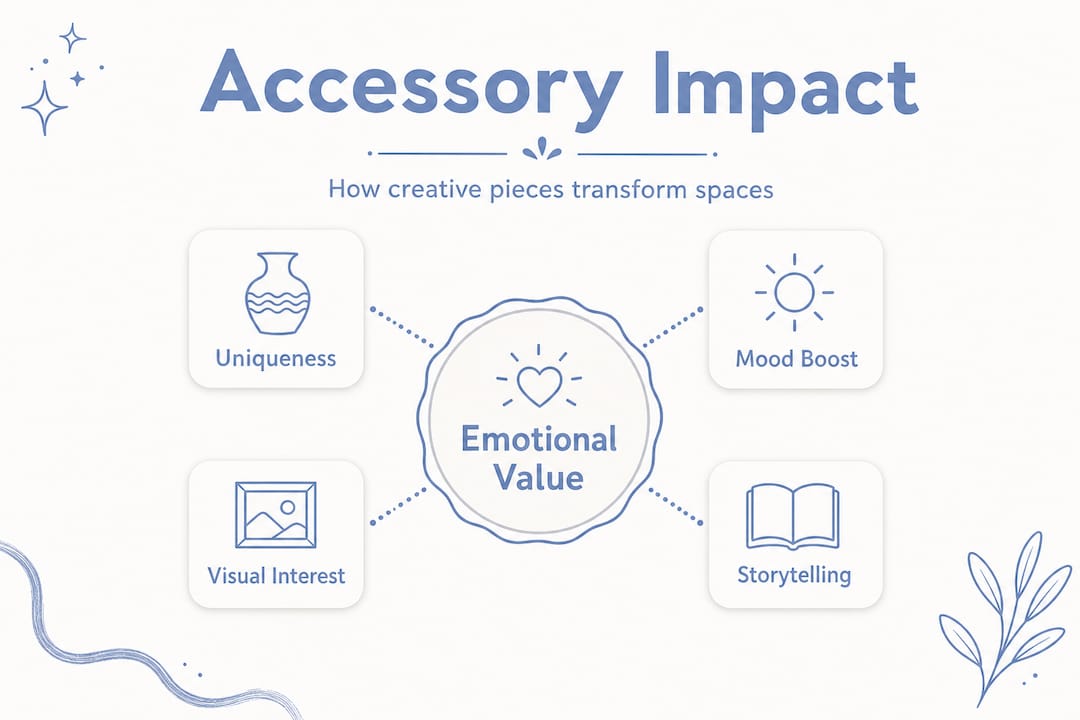
| Uniqueness drives value | Creative, handmade accessories add emotional and visual impact that mass-produced items can’t match. |
| Mindful curation is essential | Accessorize 30-50% of your surfaces to balance style and avoid clutter. |
| Layer and group effectively | Use layers and odd-numbered groupings for engaging, harmonious displays. |
| Gifts with meaning last | Thoughtful, handmade accessories make memorable, valued gifts. |
| Wellbeing benefits | Short-term mood and mindfulness can be boosted by creative, tactile home accents. |
Why creative home accessories matter
Now that we’ve set the stage for how overlooked accessories can redefine your space, let’s understand why the demand for unique, creative items is surging.
For years, home decor was dominated by mass production. You’d walk into a big-box store and find the same throw pillow, the same ceramic vase, and the same wall print that thousands of other people already had in their homes. That’s changing fast. More and more people are actively seeking out items that reflect who they are, not just what’s trending in a catalog.
The numbers back this up. The US handicrafts market was valued at USD 45.5 billion in 2024 and is projected to reach USD 70.2 billion by 2034, growing at a 4.5% CAGR. A big part of that growth is being driven by the home decor segment, where consumers are placing a premium on uniqueness and personal meaning. This isn’t a niche trend. It’s a cultural shift.
So what are people actually looking for? When you explore unique decor trends, a few consistent themes come up:
- Individuality: People want their homes to feel like them, not like a showroom.
- Cultural connection: Handmade items often carry regional or artisanal heritage that resonates emotionally.
- Authenticity: There’s a warmth and imperfection to handmade pieces that machine-produced items simply can’t replicate.
- Storytelling: A one-of-a-kind accessory gives you something to talk about, a conversation starter with real history behind it.
This is also why gift shoppers are turning to handmade accessories in bigger numbers. A personalized vintage decor piece or an artisan-crafted tray says far more than a gift card ever could. When you give something unique and handmade, you’re giving a piece of something human.
How creative accessories transform your space
With strong reasons to prioritize unique accessories, let’s see how they actually work to transform a home and how you can apply these principles yourself.
Think of decorating like cooking with a recipe. You start with the big ingredients (furniture, flooring, paint) and then you season the dish with accessories. Without those final touches, the meal is technically edible, but it’s missing something essential. Accessories are the seasoning that makes a space come alive.
Interior design professionals use a concept called layering to describe this process. You start with your foundational furniture pieces, then add textiles and lighting to create texture and mood, and finally you bring in personal objects in odd-numbered groupings to create visual interest and balance. This approach, often called the rule of three, works because odd numbers feel more natural and dynamic to the human eye. A grouping of two items looks deliberate but static. A grouping of three feels like it’s telling a story.
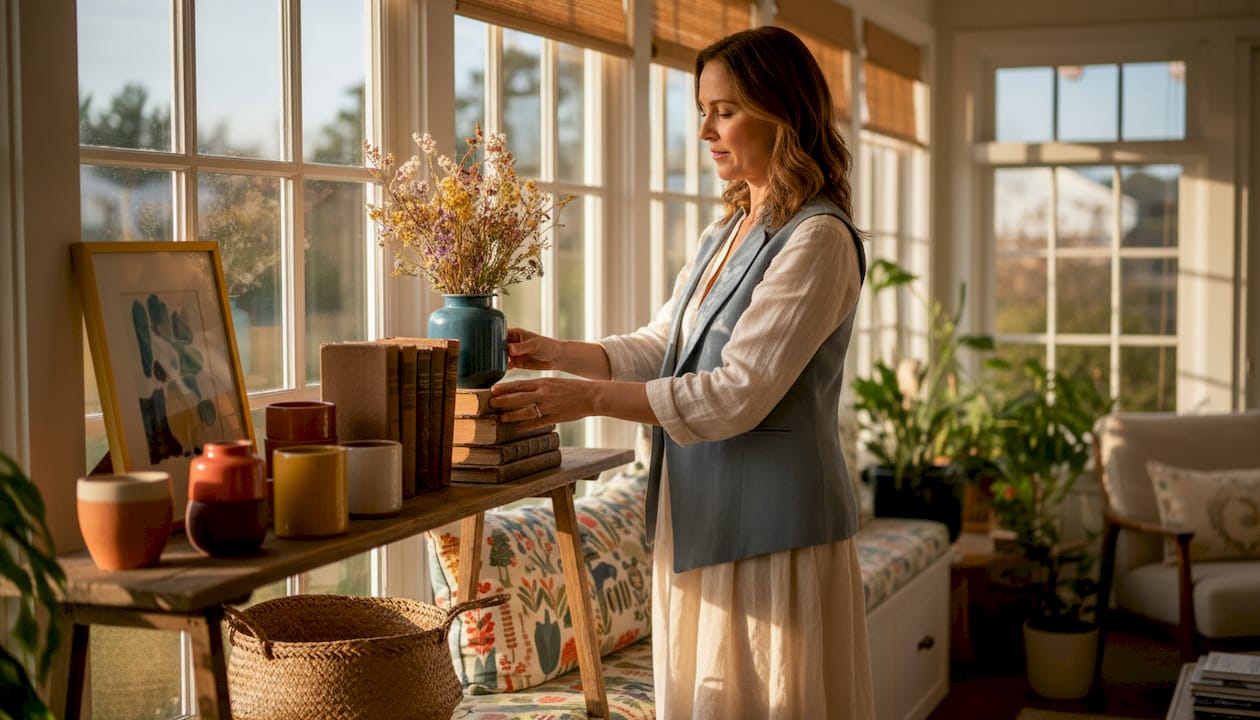
Here’s a quick comparison to show why the layering approach outperforms a random accessory dump:
| Approach | Visual result | Emotional feel |
|---|---|---|
| Accessories without layering | Cluttered, confusing | Overwhelming |
| Furniture only, no accessories | Bare, sterile | Cold and unwelcoming |
| Layered with creative accessories | Cohesive, textured | Warm and personal |
| Layered with handmade focal pieces | Distinctive, curated | Alive and meaningful |
Beyond aesthetics, there’s a real emotional case for handmade accessories. Crafts-based interventions across 19 studies showed short-term improvements in mood, anxiety, and life satisfaction. Touching, seeing, and living with tactile, authentic objects creates a kind of mindfulness that mass-produced decor simply doesn’t trigger.
“A handmade object carries the energy of the person who made it. You can feel it when you hold it. That’s not something a factory can reproduce.”
Here’s how to actually apply the layering method in your own home:
- Start with your anchor piece. Choose one large item per room that sets the visual tone, a sofa, a dining table, or a bold rug.
- Add texture with textiles. Layer in throw blankets, cushions, or a woven runner to soften hard surfaces and add warmth.
- Introduce lighting layers. Combine overhead, floor, and table lighting to create mood at different times of day.
- Build your accessory grouping. Use the rule of three to cluster items of varying heights and textures on shelves, mantels, or tables.
- Anchor with a handmade hero piece. One truly unique, artisan item per grouping gives the whole arrangement a soul.
Pro Tip: When building a rule-of-three grouping, vary the height of each item deliberately. One tall, one medium, one low. This creates a visual rhythm your eye naturally follows, making the arrangement feel intentional rather than accidental.
The value of artful accessories lies not just in what they look like, but in how they make you feel every time you walk into the room.
Curating your space: Tips for balance and impact
Understanding the power of creative accessories, it’s crucial to curate them purposefully. Here’s how you can add personality without creating chaos.
This is where most people go wrong. You find a few pieces you love, then a few more, and before long the shelves are full, the surfaces are crowded, and the room feels heavy instead of inviting. It’s a trap that’s easy to fall into, especially when you genuinely love what you’re collecting.
Overdecorating has a few telltale signs: no clear focal point, surfaces covered more than 50%, a mix of styles with no unifying thread, and too many small items fighting for attention. The result is visual clutter that actually raises stress levels rather than lowering them.
Here’s a simple framework to keep you balanced:
| Surface coverage | Visual outcome | Recommendation |
|---|---|---|
| Under 30% | Too minimal, lacks character | Add one or two statement pieces |
| 30 to 50% | Balanced, curated | Ideal range for most spaces |
| 50 to 70% | Starting to feel busy | Edit down and prioritize |
| Over 70% | Overwhelming, cluttered | Remove items and regroup |
When you’re choosing handmade decor, keep these practical rules in mind:
- Pick one focal point per surface. Let one standout piece do the heavy lifting. Everything else supports it.
- Leave intentional empty space. Negative space is not wasted space. It gives the eye a place to rest and makes your featured pieces pop.
- Mix scales. Pair one large item with a medium and small piece to avoid a flat, same-size lineup.
- Avoid collections of tiny objects. A dozen small things create noise. Two or three larger items create presence.
- Keep a consistent thread. This doesn’t mean everything has to match, but a shared color, material, or mood keeps the arrangement from feeling random.
Pro Tip: Before buying a new accessory, take a photo of the space where it will live. Look at the photo critically. If the area already looks full in the image, you probably don’t need another item. If there’s a natural gap or the space feels cold, you’ve found your opportunity.
Learning to personalize your decor doesn’t mean filling every inch. It means choosing the right pieces with intention and letting each one breathe.
Creative accessories as thoughtful gifts
Once you’ve learned to curate your own space, these same principles make creative accessories the go-to choice for meaningful, personalized gifts.
Giving someone a handmade home accessory is a completely different experience from giving a generic gift. When you hand someone a one-of-a-kind mosaic tray or an artisan-crafted piece of glassware, you’re not just giving them an object. You’re giving them a daily ritual. Every morning when they use that tray on their breakfast table, or every evening when they pour a drink into that beautiful glass, they’ll think of you.
The emotional impact of gifts like these is well-documented. While mass-produced items provide uniformity, creative handmade accessories offer irreplaceable sensory and emotional benefits. The texture of a hand-thrown ceramic bowl, the color variation in a stained glass piece, the subtle imperfections in hand-woven textiles — these are the details that make a gift feel alive.
“The best home gifts are the ones that enrich an everyday ritual. A beautiful tray that holds morning coffee essentials, a throw that wraps around a person on a cold evening — these things become part of someone’s story.”
Here’s how to choose a creative accessory that will actually be used and treasured, not stuffed in a closet:
- Think about the recipient’s daily rituals. What do they do every morning or evening? A beautiful tray, a decorative candle holder, or a handcrafted coaster set will be used constantly.
- Prioritize sensory appeal. Choose something with interesting texture, rich color, or visual depth. Handmade items naturally deliver this.
- Favor quality over quantity. One truly exceptional piece beats a set of mediocre ones. Thoughtful interior design layering experts agree that a single standout gift enriches a space without adding clutter.
- Look for pieces with a story. Artisan-made items often come with context about how they were made or where the craft originates. That story is part of the gift.
- Consider their existing style. You don’t need to match exactly, but you want the piece to feel harmonious, not jarring, in their home.
The unique decor gift shopping experience has evolved too. You can now find handmade, one-of-a-kind pieces online without spending hours searching through marketplaces. The key is finding a source that curates with intention, where every piece is selected because it genuinely adds something special.
Our perspective: Quality over quantity is the secret
Having explored gift-giving, let’s look candidly at the deeper truth behind creative accessorizing — what most guides miss.
Most decorating advice tells you to add things. Add a throw pillow here, a vase there, a few candles, some books. And then the space feels “done.” But here’s the perspective we’ve developed after seeing hundreds of homes and the accessories that actually make people happy: the most beautiful spaces we’ve encountered are defined by what was left out, not what was put in.
True style is editing, not collecting. Anyone can accumulate. Very few people have the confidence to curate.
The handmade decor movement is genuinely exciting. As a top trend for 2025 and beyond, handcrafted items are surging in popularity precisely because they offer authentic connection in a world of copies. We believe in this completely. But the flip side is real too. If you chase every handmade item you love without editing, you end up with a cluttered space that feels chaotic rather than curated, regardless of how beautiful each individual piece is.
The pieces that stay with people, the ones they remember and return to emotionally, are almost always chosen with great care and placed with real intention. That deeper emotional impact doesn’t come from having more. It comes from choosing better.
Our honest advice: give yourself permission to love fewer things more deeply. Buy the one extraordinary item instead of three good ones. Rotate your accessories seasonally so each piece gets the spotlight it deserves. And when something no longer feels right in your space, let it go.
Restraint isn’t a lack of creativity. It’s the highest form of it.
Explore one-of-a-kind accessories for your home or next gift
Ready to curate your own space or give an unforgettable gift? You’ve learned the principles. Now it’s time to find the pieces that bring them to life.
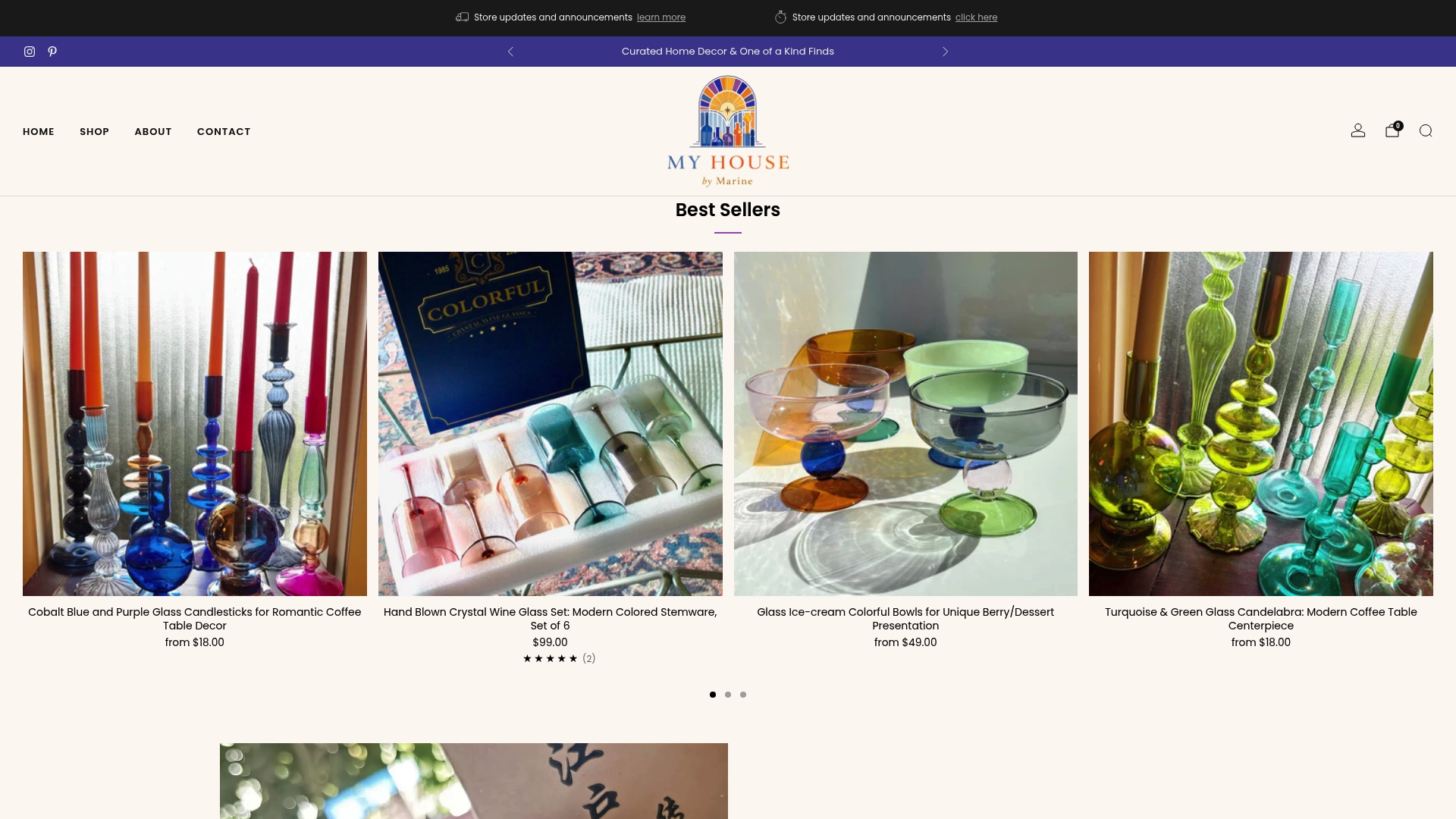
At My House by Marine, we curate handmade and one-of-a-kind accessories that are chosen exactly because they earn their place in a room. From our stunning teal mosaic tray, a showpiece that combines artisan craft with everyday function, to thoughtfully assembled curated gift sets that make gifting genuinely easy, every item here is chosen with intention. Browse the full unique home decor collection to discover pieces that will make your home feel exactly like yours, or give someone a gift they’ll remember every single day.
Frequently asked questions
What makes a home accessory ‘creative’?
Creative home accessories are typically handmade, unique, and thoughtful in design, often featuring artistic touches not found in mass-produced items. The US handicrafts market reflects the growing consumer demand for exactly this kind of originality and craftsmanship.
How do creative accessories affect wellbeing?
Studies show creative, handmade decor can enhance mood, reduce stress, and promote mindfulness, especially in the short term. Crafts-based interventions across 19 studies demonstrated measurable improvements in mood, anxiety, and life satisfaction.
How many accessories is too many for one space?
Experts advise accessorizing only 30 to 50% of visible surfaces to avoid visual clutter and maintain a sense of balance. Covering more than 50% of surfaces is a common overdecorating pitfall that can make a room feel stressful rather than serene.
Are handmade home accessories a good gift?
Handmade items are highly valued as gifts for their uniqueness, emotional resonance, and ability to create lasting memories. Unlike mass-produced items, creative handmade accessories offer sensory and emotional benefits that generic gifts simply can’t match.

